Guide to Easter Island (Rapa Nui)
Easter Island is one of the most remote and fascinating places in the world. It has its own unique indigenous South Pacific culture and a natural landscape found nowhere else in the world.
Politics and conflict has always been part of its history, with numerous protests and changing relationships with the Chilean government and national parks. To truly appreciate the beauty and surroundings, it is important to understand the struggles of the local people as well.
About the Island
The most important thing to know is that indigenous Rapa Nui people are very distrustful of outsiders. This distrust stems from systemic abuse of the natives for hundreds of years through slavery, famine, disease epidemics, and more. Your visit to the island will touch upon most of these issues since the island only has about 6000 inhabitants and feels quite intimate. I do recommend reading through the Wikipedia page for Rapa Nui History to better understand the island before your arrival to prepare for sensitive topics that will inevitably come up with the locals.
Early History
Early European missionaries and visitors recorded stories that suggest the island was first inhabited in the 400s but archeological evidence only supports inhabitation from the 800s onward. The early inhabitants came most likely from what is now French Polynesia by boat. The old Rapa Nui language shared many commonalities with Tahitian and has now morphed into modern Rapa Nui through sustained contact since the 1800s.
There have been studies that suggest when the statues were built, the island was thriving and hosted as many as 10,000 people. By the 1600s, overpopulation and deforestation has caused the island population to collapse down to a few thousand. Europeans have discovered this island in the late 1700s and sent expeditions to survey the landscape. Many early historical accounts of the island are based on the findings from these expeditions. By the late 1800s, there were European missionaries on the island who documented much of the oral stories that are now retold on the island today.
Modern History
The most regretful part of their recent history is the enslavement of 1400 people, or half the island population, to Peru for forced labor in 1862. Most of the enslaved islanders died in Peru due to disease and poor seafaring conditions, while a handful were eventually freed in 1863. The freed people returned to the island and brought smallpox with them which decimated the remaining population. A subsequent visit by missionaries brought tuberculosis and killed many more. There were fewer than 100 survivors.
By the 1900s, the island was disputed territory and eventually claimed by Chileans who leased out much of the island for sheep farming. Natives were forced out of their land and only given small plots in Hanga Roa town. They had very little economic opportunities aside from agriculture.
As aviation and military needs grew around the world, Easter Island became a strategic South Pacific stop that provided military and emergency aircraft landings. An airport was built in 1965 and further expanded by the arrival of a small US Air Force base and NASA tracking station. Around this time, all Rapa Nui natives were given Chilean citizenship, the rest of the island was reopened, and the sheep farms evicted.
Politics Now
There were a few protests and uprisings in recent years to take back the monuments and put them under indigenous control. The most recent one happened started in 2011 and ended in the transfer of the Rapa Nui National Park and related lands to Ma’u Henua Polynesian Indigenous Community, a governing body established by the Rapa Nui themselves.
While indigenous rights is good on the surface, the reality of this change in Rapa Nui seems very grim. The park fees cost almost $100 USD per person and the guides will tell you it goes into conservation when in reality, most of it goes into the pockets of the local officials and those rangers employed by the park. The new governing body rejected any third party financial audits and millions earmarked by the Chilean government for the preservation remain untracked. There is very little accountability for how your park fees get spent.
Land Ownership
Land on Rapa Nui is now only owned by indigenous people following the reforms in the 1960-1980s. Most of the current stakes have been claimed through ancestry and oral traditions, only formally registered with the local government in recent years. Most hotels in town are locally owned, have limited access to capital, and are very basic but expensive. The nicer resorts, especially in more remote areas of the island, have dubious claims to the land and connections to local government officials. Much of the land that was released following the removal of the sheep farm still belongs to the national park or the government for public use.
Local Economy and Lifestyle
The economic opportunities for most Rapa Nui residents is still very limited to this day. Most of the educated and well-off people moved off the island for better opportunities. There are more Rapa Nui people outside of the island today than on the island. Most people work in fishing or tourism while many are unemployed and live off government assistance or support from family members.
Drinking is a huge problem on the island because of the limited opportunities and you will occasionally see drunk men wandering the streets or passed out amongst cans of beer during broad daylight in Hanga Roa. The cycle of despair and generational trauma is very real here.
Most locals live in shacks with dirt floors, brick walls, and tin roofs. Electricity is available most hours of the day from a diesel power plant although there are occasional power outages. The wealthy local landowners often have cars and nicer houses, while most of the population rely on bikes and walking to get around.
Internet connectivity is limited, with most businesses using Starlink and locals sharing Starlink connections or relying on cheaper cellular connection for casual use. Cellular coverage is nonexistent outside of Hanga Roa town.
There are supply barges that come 2-3x a month, bringing preserved foods, construction material, cars, and other goods from Chile. Aside from limited vegetables and fruits grown on the island or fish caught on in the sea, everything else on the island is either flown or shipped in so everything is very expensive.
Rapa Nui National Park and the Moai Statues
As a visitor, you are most likely coming to the island to see the famous statues lined up next to the ocean. These are probably the most visibly stunning features on the island but not the only things to see. You’ll need to go with a tour guide to enter most of the sites on the island, a relatively new change enacted by the national park to stop graffiti and create jobs.
Park Fees
The fee for international visitors is $80 USD and can be paid online, at the airport upon arrival, or one of the offices of the national park when you start your tour.
The cost is extremely high for a national park and it’s unfortunately unclear where the millions in annual revenue goes. Many of the park rangers seem overly well equipped donning the latest fashion with brand new 4x4 trucks zipping through the roads while much of the park infrastructure are in dire need of an overhaul. Corruption and embezzlement is pretty rife throughout the island’s history and is an unfortunate part about life here.
Guides
The park requires a guide to accompany tourists to most of the sites, mostly as a job creation scheme for the locals. While many of the local guides are great, you’ll find many bad reviews and accounts of tour experiences online on TripAdvisor and more. Most guides do not have formal training or understanding of the scientific findings and rely mostly on oral stories for their information. It is still facinating to listen to their side of the story but for a richer experience, I suggest doing a mix of both, one day with a local and another day more focused on archeology.
Paul H. Pownall (Tekarera Kainga Ora Hotel) - Owner of the hotel I stayed at and helped with archeological field work as a teenager in Rapa Nui back in the 1968 when he was 16. He has so many fascinating stories of the island back then and also of his life in Rapa Nui. Because of his old age, he seldom leads tours but will be more than happy to chat and share his wisdom if you stop by the hotel and ask for him.
Patricio Vallerino (patricio.aotour@gmail.com) - Recommended by Paul Pownall for a more archeology focused tour and seems highly reviewed online. I’ve met people at the hotel who did a tour with Patricio and enjoyed it very much.
Paul’s father was a photographer on the 1968 expedition to Rapa Nui and Paul himself even has a short article in the newspaper about his experience. He had a successful career in aerospace and defense and returned to the island many times since. He later married a Rapa Nui woman he met as a teenager who was one of the chief’s daughters, won a beauty pageant in Chile, married, had kids, and later divorced a Chilean business tycoon. Paul spent the last 30 years on the island with her, personally funded and built the hotel on her ancestral land, but she committed suicide before the hotel was complete because of troubles from her previous marriage. Much of the land surrounding the hotel extending to the ocean belonged to his late wife but were squatted on by others and eventually lost.
You’ll discover that there will always be two sides of the story, the ones passed down generations through oral storytelling, and the evidence backed by archeological and scientific findings. Because the locals distrust outsiders, many of the local guides will prefer to tell their oral history even though the stories may include exaggerations, modifications, and content mixed in from Tahitian traditions. A lot of rich oral history has been lost through generations of oppression and it is hard to decipher truth from fiction.
Conservation
For many years, UNESCO and many other international bodies have contributed to small experiments to better preserve the statues which have been slowly eroding away by the wind and salt water. Almost all of the standing statues today were facing down into the earth in the early 1900’s and lifted by rope or machines in the last 50 years. Many researchers speculated that the moai were intentionally toppled as they were thought to bring bad luck in the 1600-1700s. If you look at old photographs from 1960’s, the moai originally feature intricate carvings on the face and body, with fingers visible at the end of the arms. Samples of paint were also found on the surface of the face and body as well. The only visible patterns and fingers are now at the quarry site where some unfinished moai sit below ground, sheltered from the weather, and partially excavated.
According to Paul, on a few occasions in the past, money has been granted by UNESCO or others for conservation or preservation and stolen by those in charge, both Chilean or local. Because of this lack of accountability, there is very little outside funding available. The park was once managed by the locals in the early days of tourism, plundered and saddled with debt, and bailed out by the Chilean national parks. The actual history of this is disputed because the park office was burned to the ground years ago and all the historical records were lost.
Many locals also oppose doing anything to the statues for the fear of irreparable harm. In the early days of the park, due to the lack of proper equipment in the remote location, a few moai statues were damaged in the process.
There are a few new excavation sites in recent years run by native conservation teams. According to Paul, the teams simply dug items out of the ground, speculated on the history and utility of the item, and placed it in the exhibits. Without the proper archeological process and documentation, much of the research opportunities and historical context around these items are lost forever and part of the national park fees fund this unfortunate demise. You’ll even see a few new exhibits and buildings built right on top of existing archeological sites like the new Vaihū village. The locals built Tahitian thatched roof huts on top of the archeological dig sites even though there was no evidence of thatched roofs in archeological digs or early historical accounts.
Where to Stay
Because of the extremely remote and isolated environment, the cost of everything including construction, labor, and amenities are very expensive. Most of the accommodations are very basic island style housing and even consistent hot bath water is not easy to come by. I suggest paying a bit extra for some comforts as this is an expensive destination and comfort isn’t cheap to provide.
Comfortable
Tekarera Kainga Ora Hotel - I highly recommend staying here because of the owner Paul who has so much rich history and information to share with all of his guests. Staying here feels like you are one of his guests and not just a place to sleep. There are rental cars and tours available as well and you will receive more information through email after booking. The property has a stunning balcony overlooking the ocean, a perfect place to relax and enjoy the views. ~$250 USD per night
Hare Nua Hotel Boutique - Polished hotel in the middle of town, seems popular with group tours and usually goes for $400-500 USD per night
Luxury
Nayara Hangaroa - Waterfront luxury property with elevated service offerings, the newest luxury offering at $1200+ USD per night
Explora Rapa Nui - Located in a more remote part of the island, it is the more secluded luxury offering at $1500-2000 USD per night
Getting In and Around the Island
Flying into Rapa Nui
There are daily flights from Santiago, Chile on LATAM and few times weekly flights that connect onward to Papeete, Tahiti. In the summer, there are multiple flights a day from Santiago.
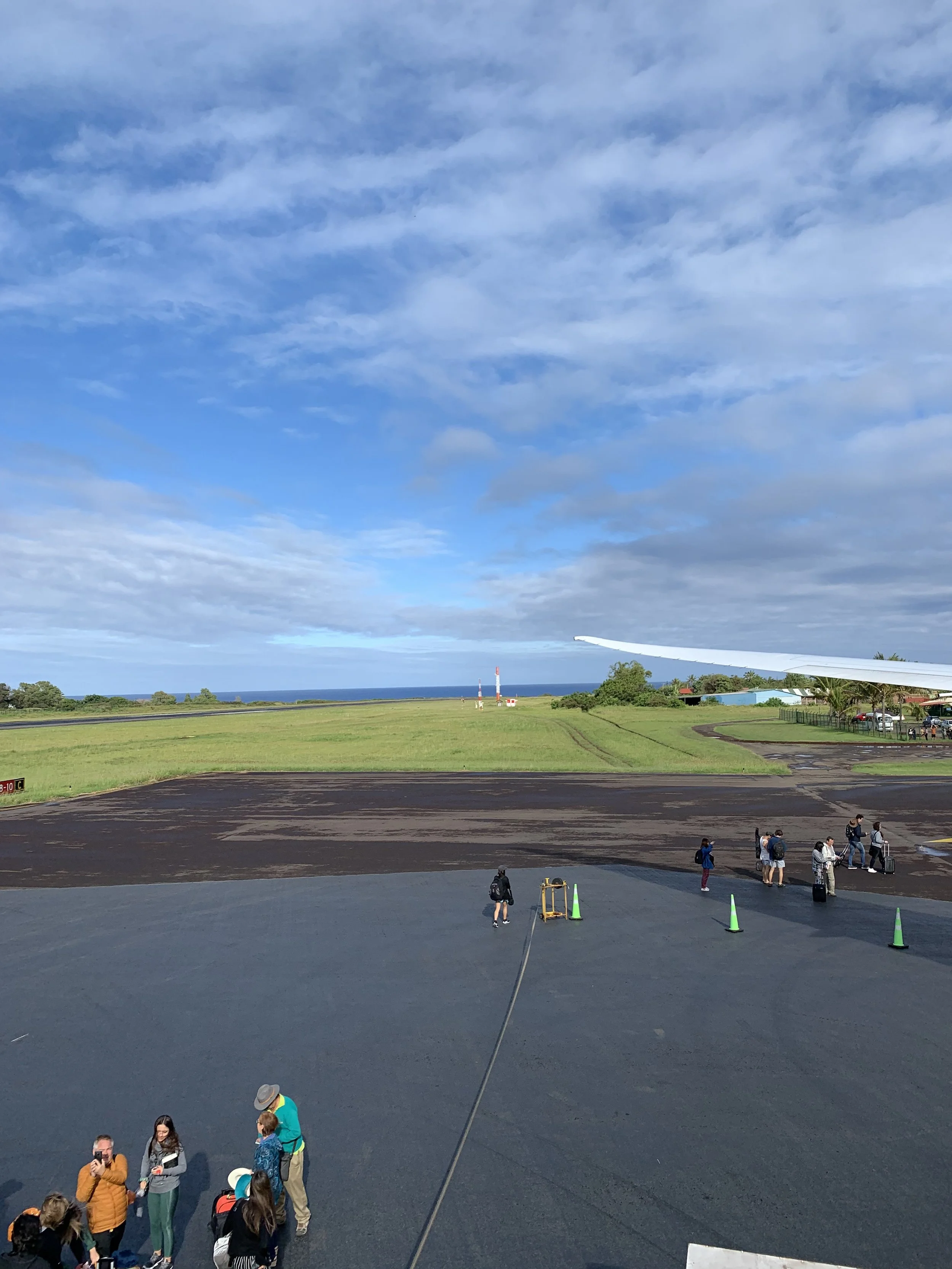
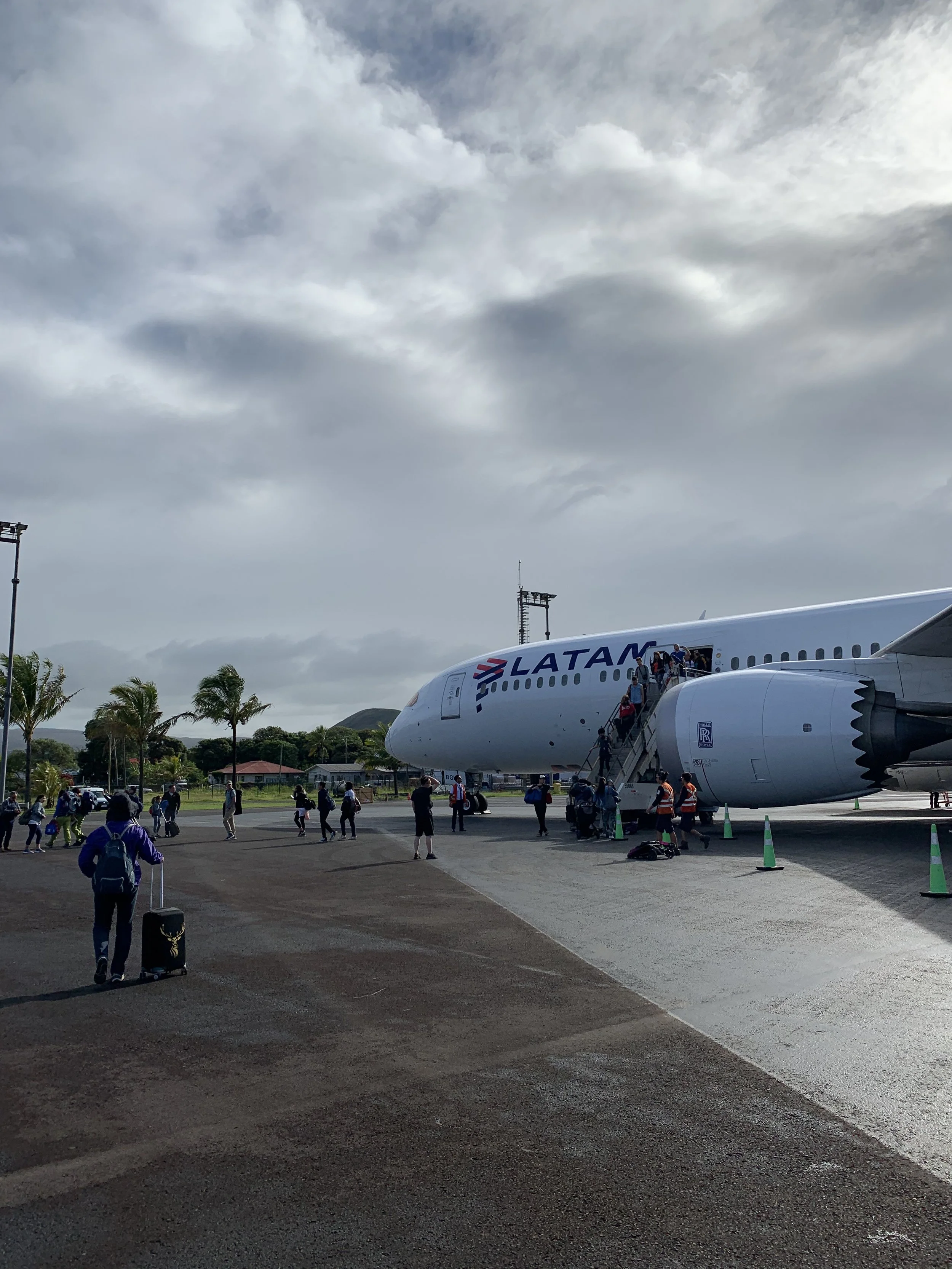
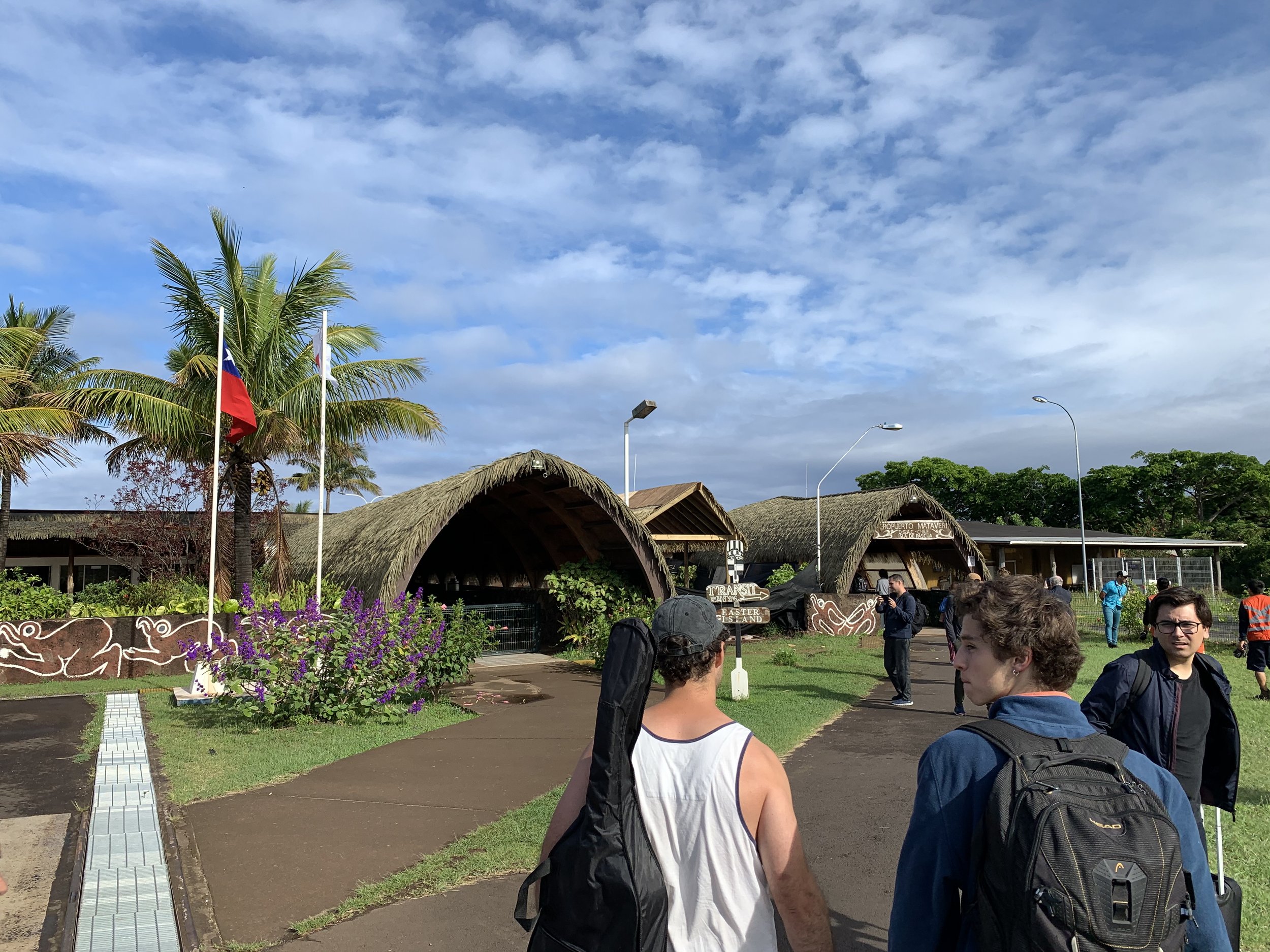
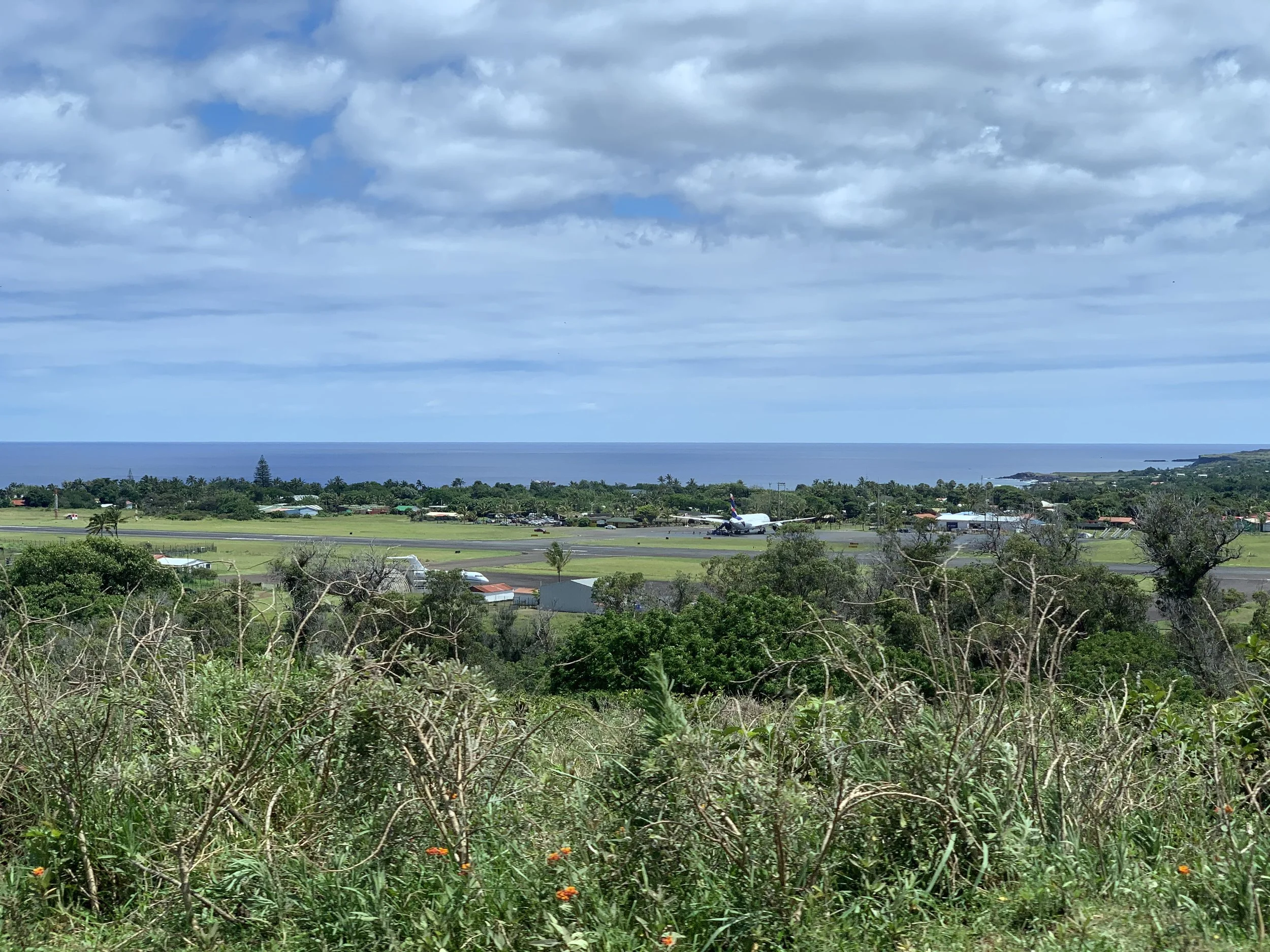
While flight prices have been historically very high, it has become cheaper in recent years. Some last minute flights may be around $300-400 round trip, a decent deal considering the same distance from LA to New York runs about $400-500. The flights are a lifeline for the island and carry much of the supplies that sustain the island.
The airport is right next to the town but about 30 minutes walking or 5-10 minutes driving on paved and unpaved roads. Most hotels will offer pickup and drop-off service, and since there’s only 1-2 flights a day, it’s often a shared transfer.
Taxis and Rental Cars
Because of the size of the island, there aren’t rideshare services or traditional taxis. Many locals are happy to give you a ride for a small fee and most restaurants or hotels can call someone to give you a ride. You can expect these rides to be paid in cash in Chilean Pesos but they’ll happily accept USD as well.
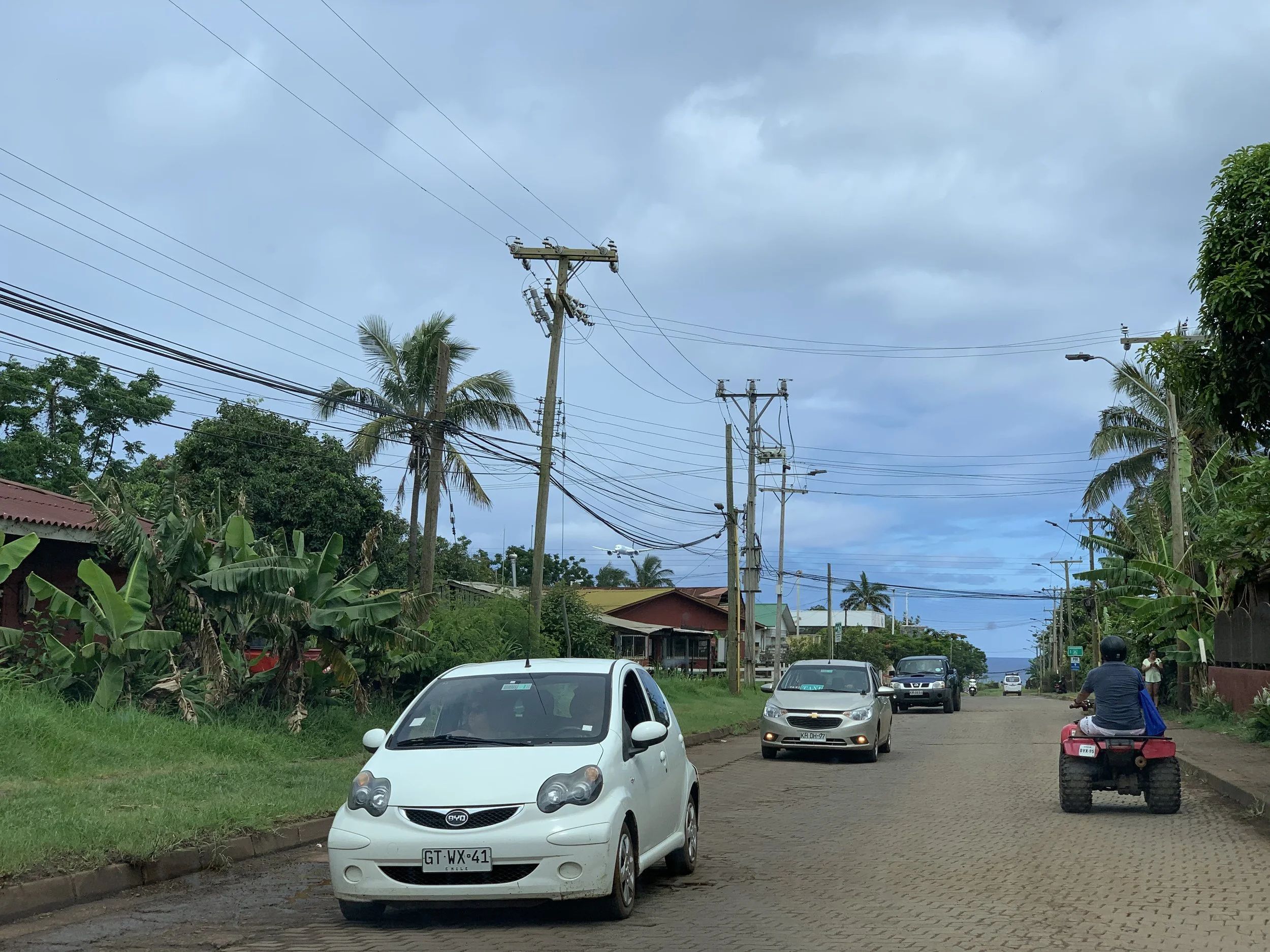
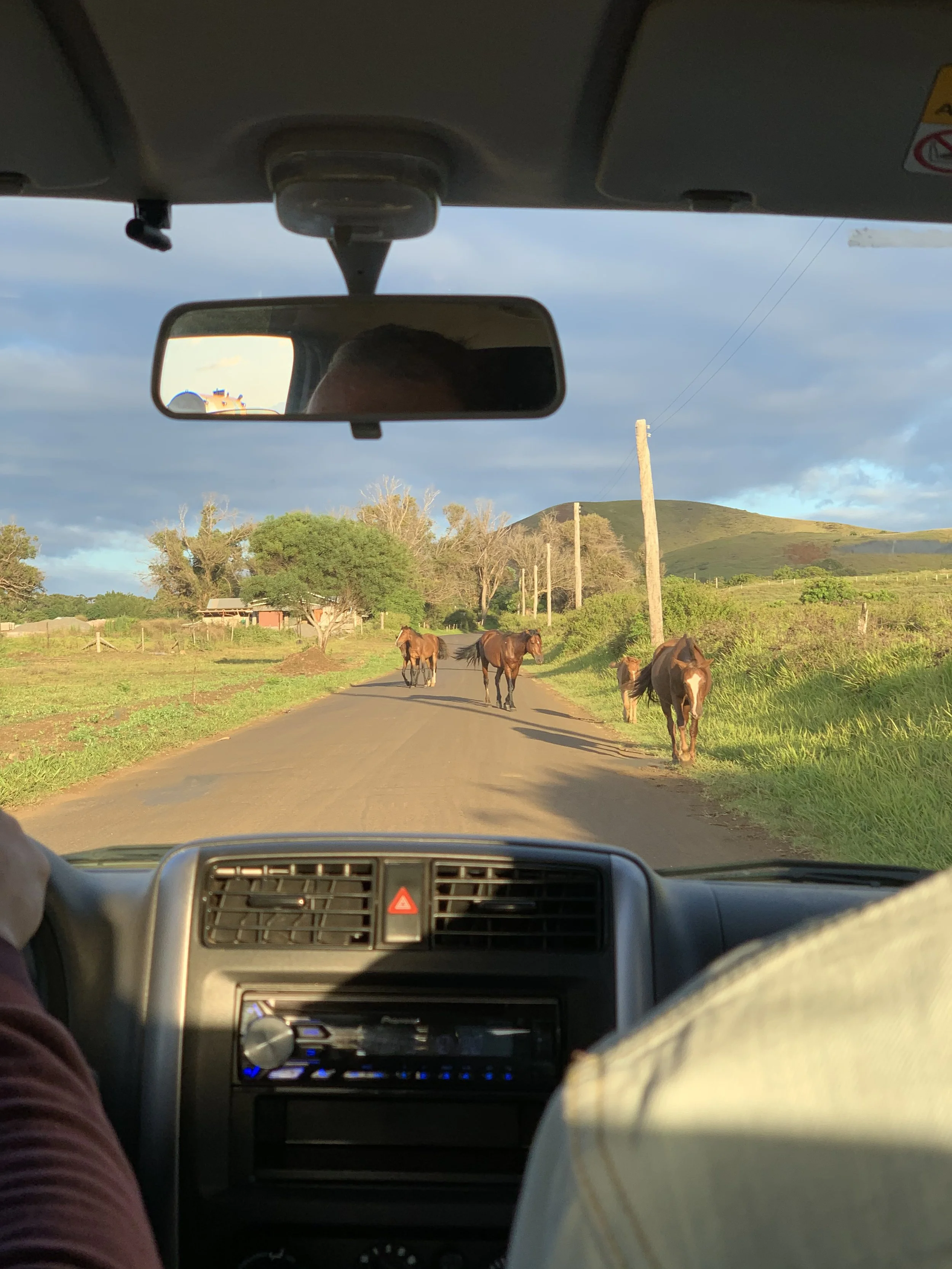
Rental cars are the better choice if you have some off time outside of your guided tours to explore. They usually cost about $60-80 USD per day for an older 4WD vehicle and up to $200 USD per day for a newer 4x4 truck. There are a few shops in town that offer rentals and your hotel may also offer rentals too. Gas is subsidized by the Chilean government so the prices are similar to the mainland.
Most lodging within Hanga Roa are walking distance to the town center and it might be nice to explore a bit by foot as well.
How Many Days to Visit?
Rapa Nui is not a big place. You can see the highlights in a full day or 2-3 days for a more in-depth tour. There are a handful of hikes and dive sites to extend the trip but for most people, I would suggest 3 days 2 nights. While it is an interesting island, I wouldn’t spend too much time here because there isn’t a huge variety of things to do and the island itself is not a tropical vacation hangout either. Your time and money is probably better spent exploring other parts of Chile.
During the summer season, there are multiple flights some days from Santiago. For a short budget trip, you can even arrive in the morning, do a full day tour, watch the sunrise the next morning, and fly out the afternoon after to cut down on accommodation and food costs too.
The tours are usually separated into a Southeastern loop and a Northwestern loop, one for each day. For a very long day, you can also combine both as well.
Day 1: Southeastern loop - Ahu Tahai, Punapau, Vinapu, Rano Kau Crater, Orango Village, one of the many caves in the area, back to Tahai for sunset and then the Kari Kari show in the evening
Day 2: Northwestern loop - Ahu Tongariki, Rano Raraku Quarry, relax on the Anakena Beach for a bit, and then visit the Sebastian Englert Museum
What to See in Easter Island?
While the list here is not exhaustive, it represents the most interesting and popular sites on the island. Many of the lesser known moai and archeological sites are in very poor condition along unmaintained roads that stretch for miles. Unless you have a keen interest in archeology or history, the other sites are probably not worth your time.
Imagina Rapa Nui has a complete list of all the activities, sites, and maps for your journey if you wish to do more research. I also recommend downloading the offline maps from Maps.me because most of the island does not have cellular service for Google Maps or other navigation apps.
1 - Sunrise at Tongariki Ahu
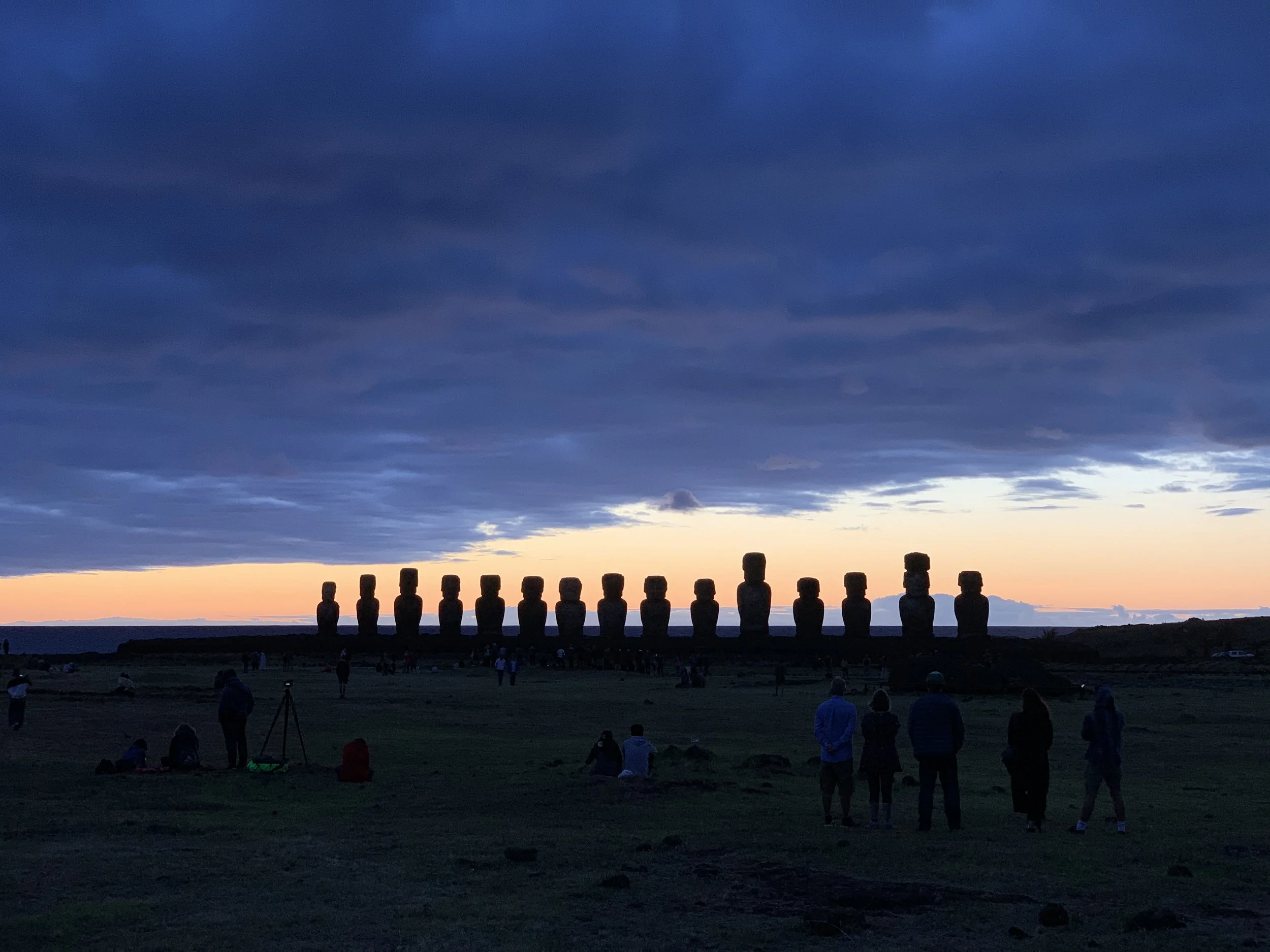
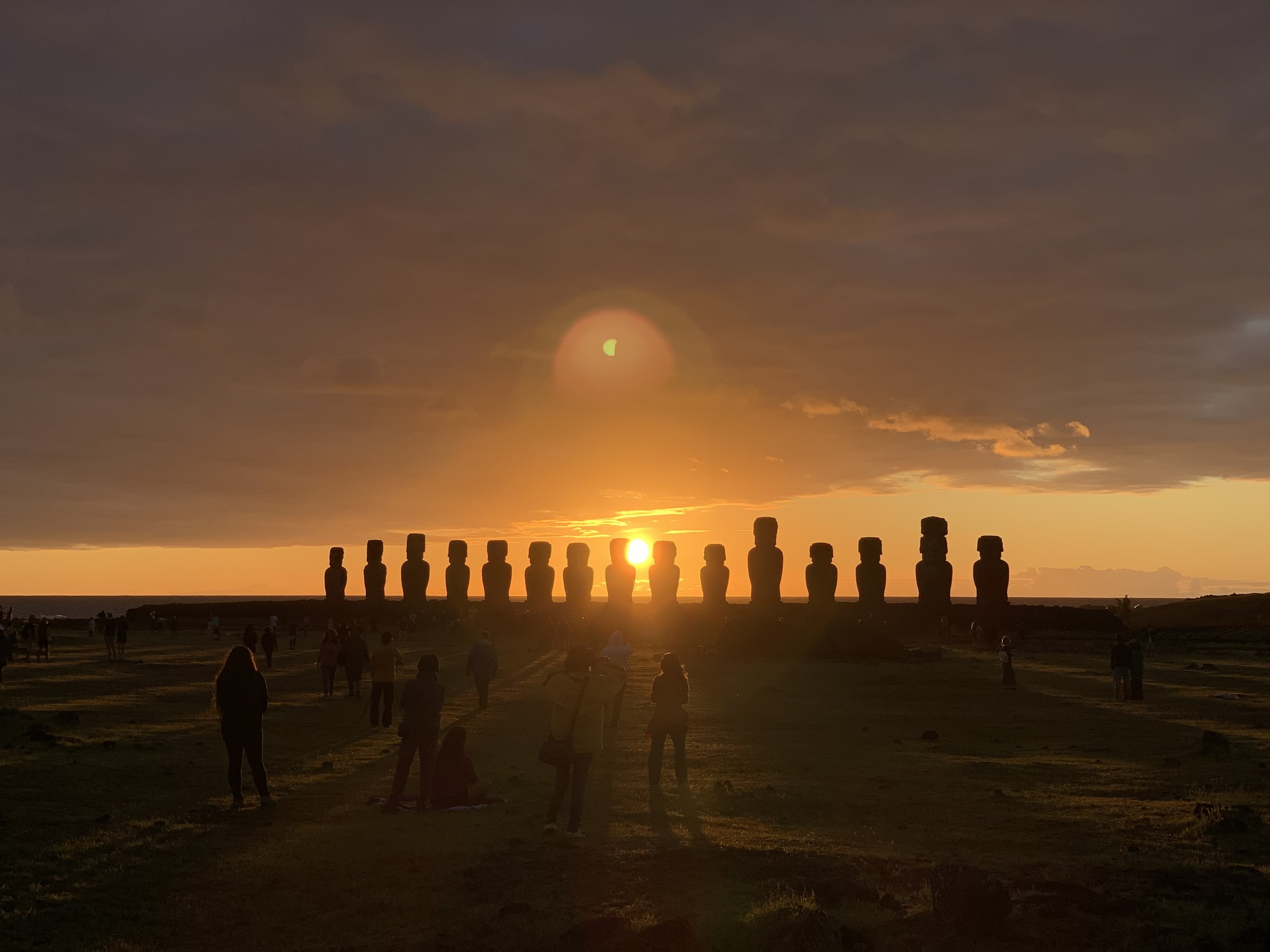
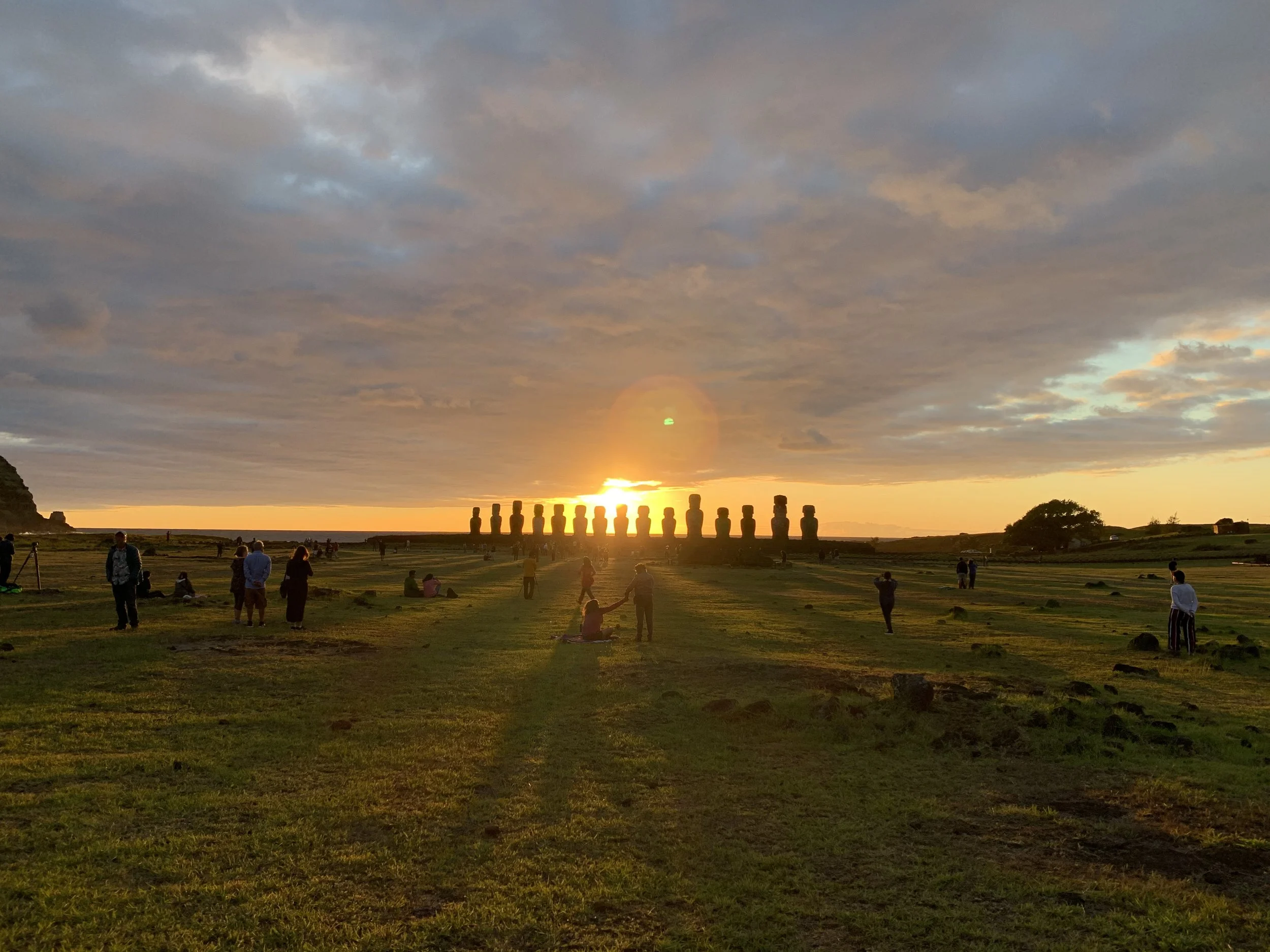
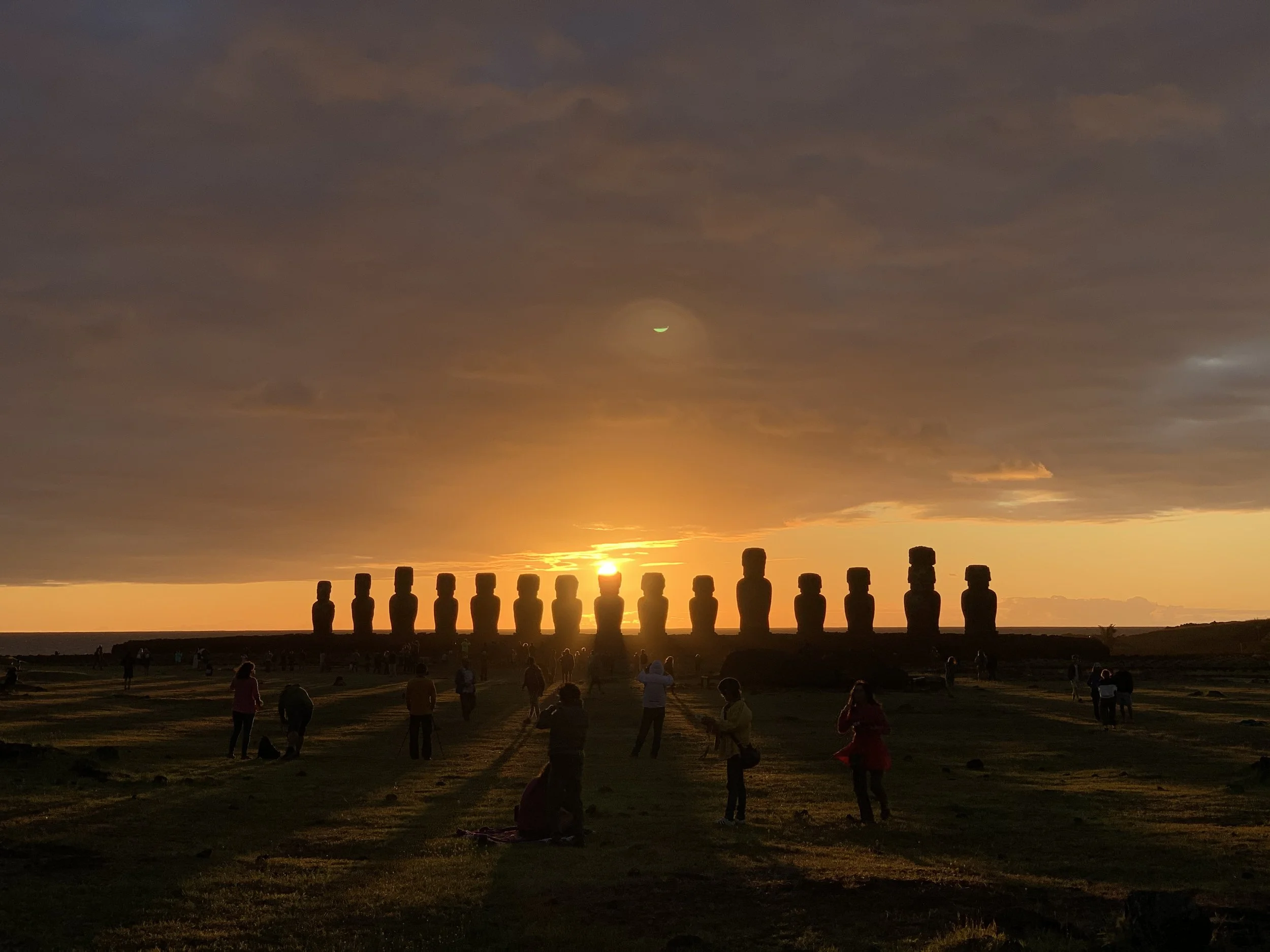
The Tongariki Ahu is set of 15 moai statues is the largest on the island and the best place to see the sunrise. It is about a 30 minute drive from Hanga Roa so wake up early and put on a light jacket before heading out. I promise this is worth it.
These moai were toppled during the civil war in the 1600s and swept inland by a large tsunami in the 1960s. They were restored and lifted in the 1990s and placed on the current platform.
2 - Rano Kau Volcano Crater
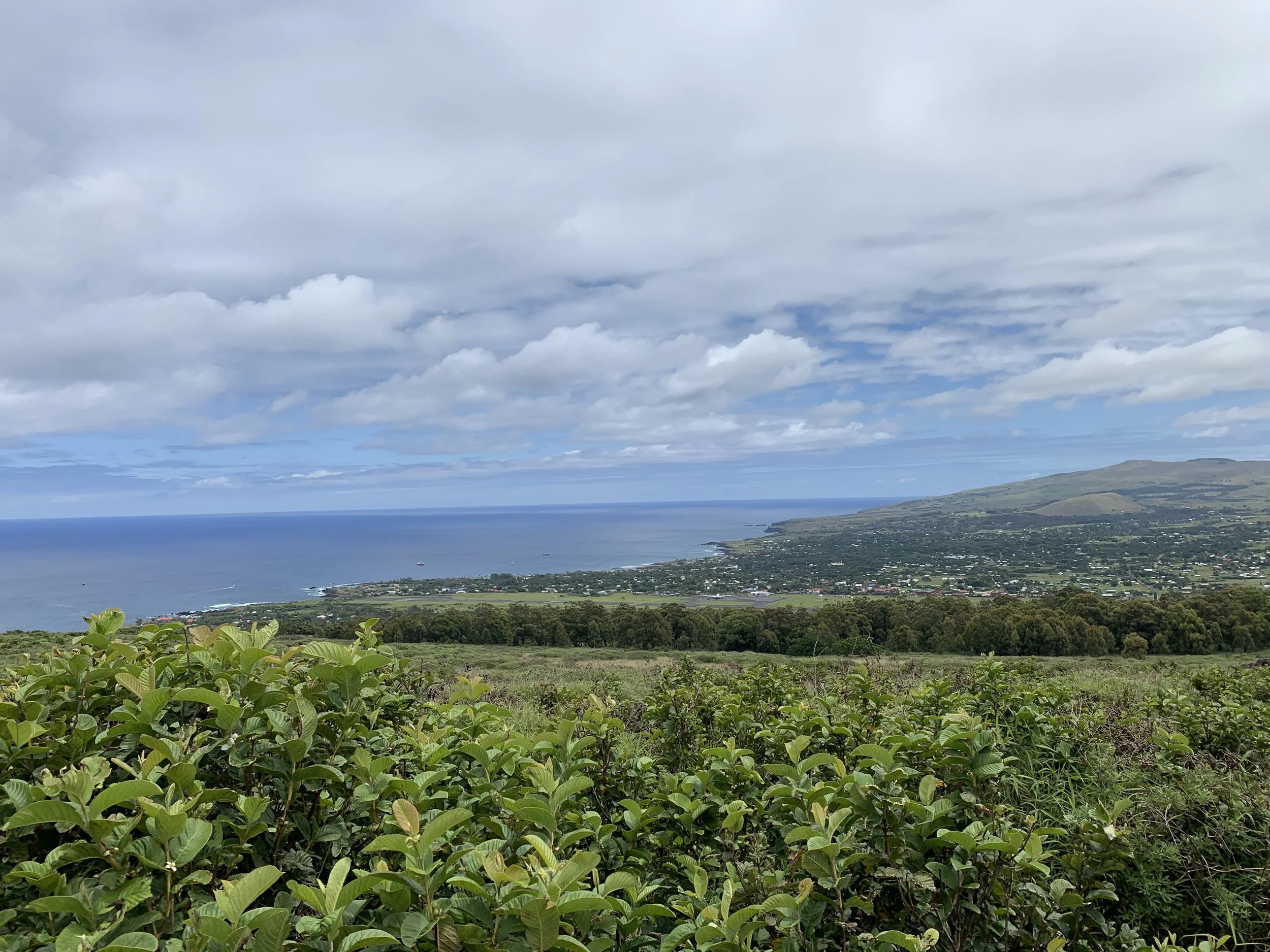
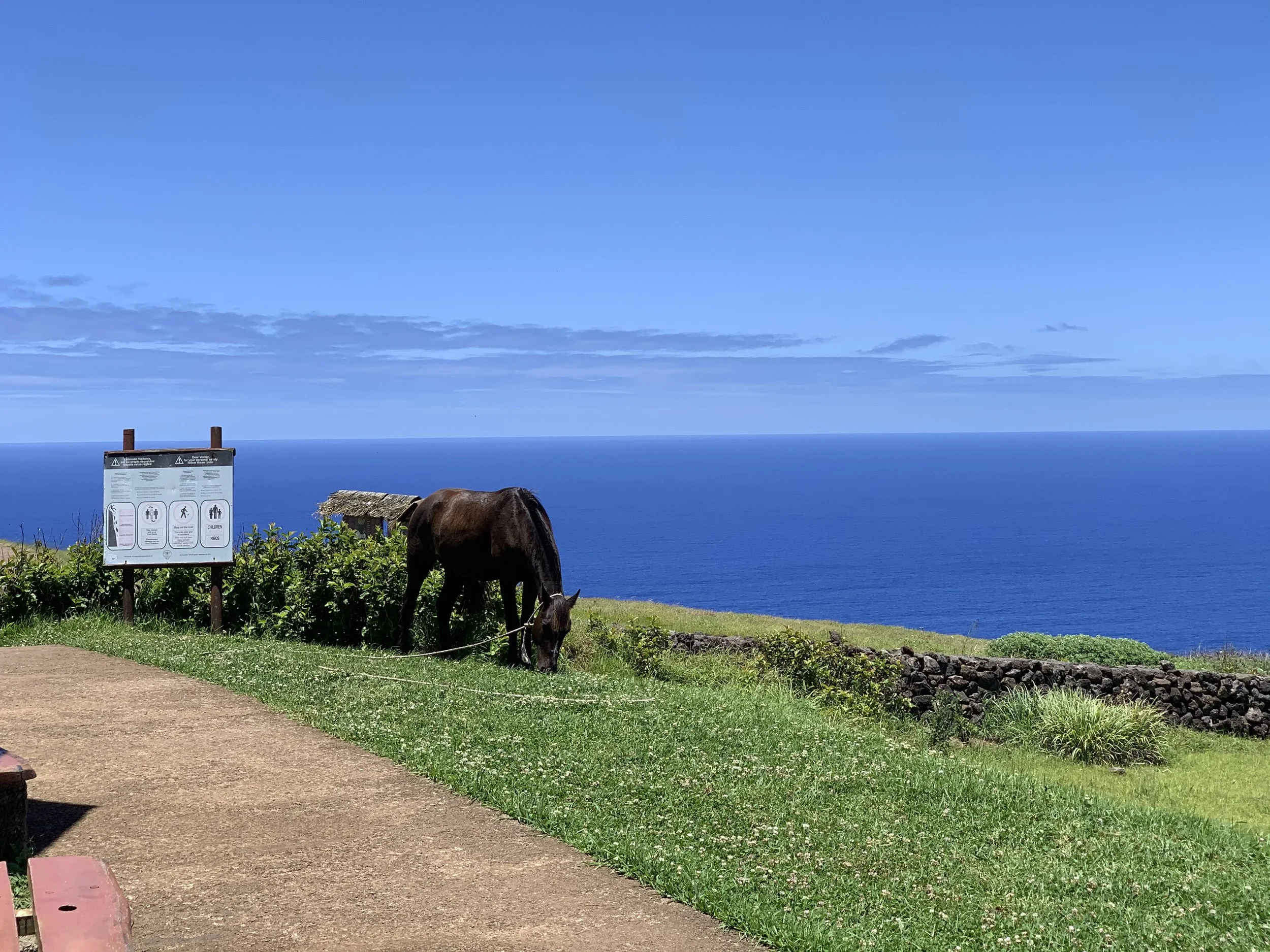
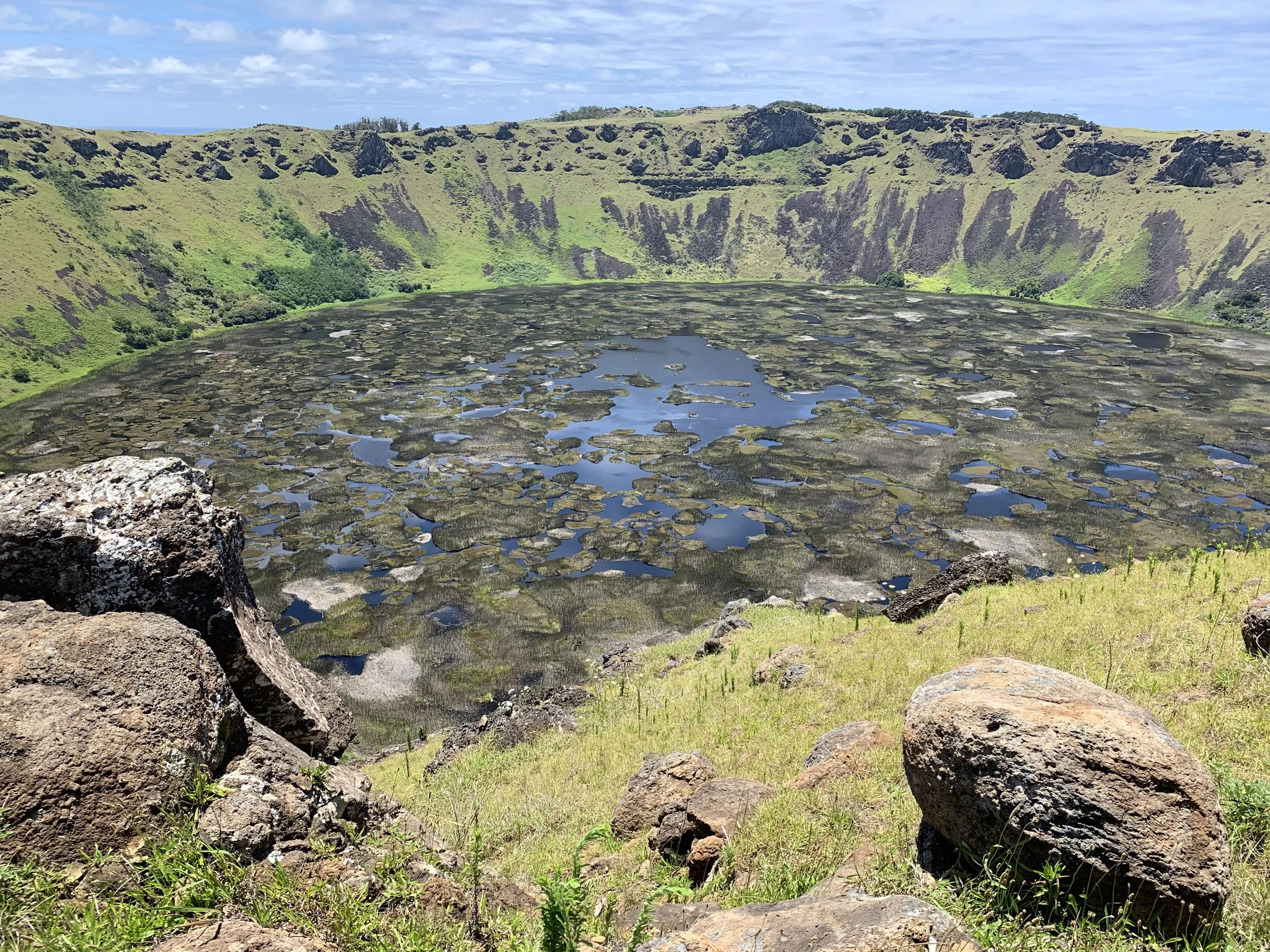
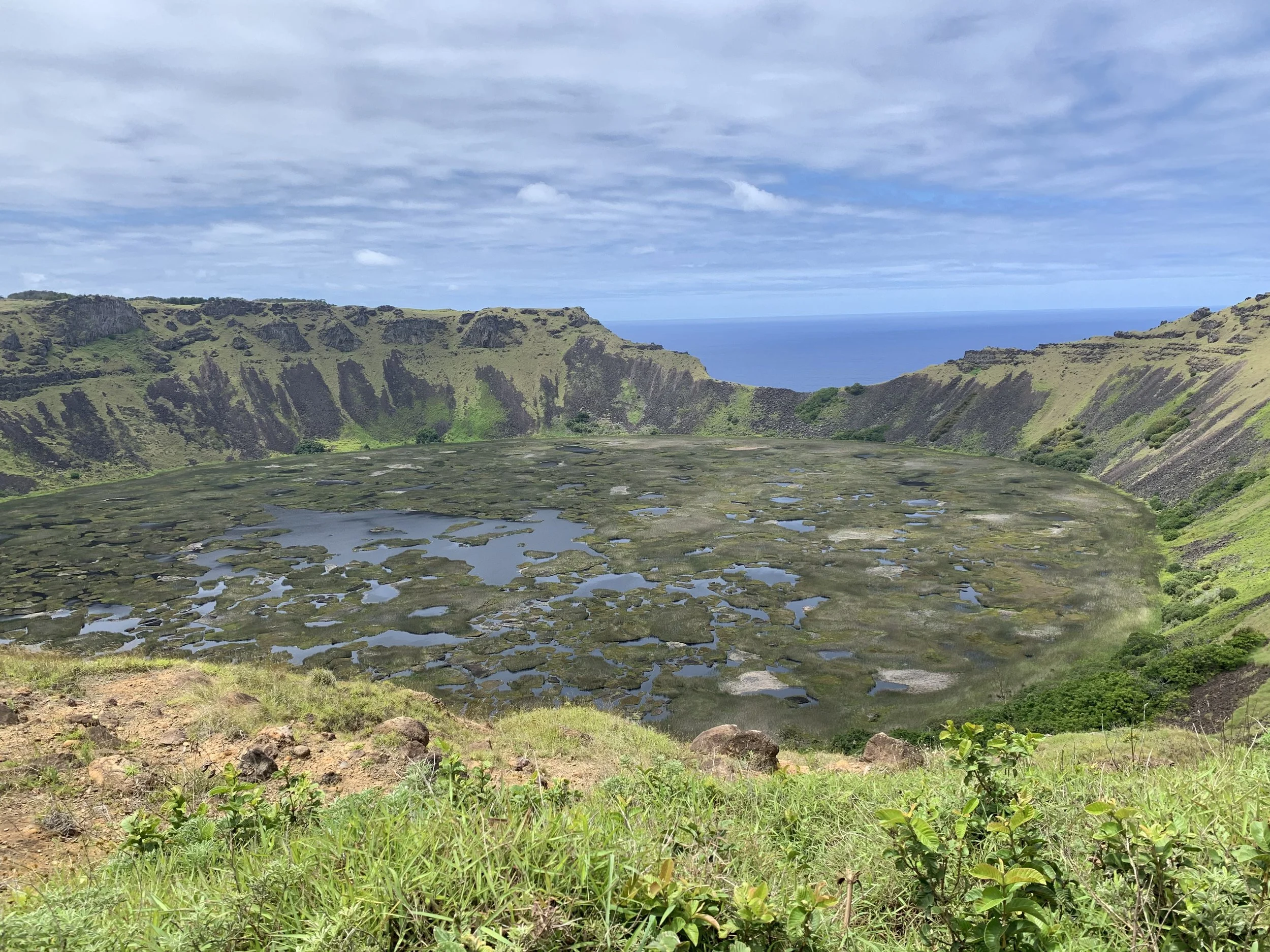
There’s a short hike from the parking lot of the Orongo Ceremonial Village to the crater view point where you can see the crater in all its glory. The microclimate in the crater means one side gets more rain than the other and there is a small lake in the middle with unique species found nowhere else in the world. The drug Rapamycin, an anti fungal and immune system suppressor, was isolated from a bacteria found in the crater here.
The drive up to the crater is beautiful and you can see Hanga Roa from the road. There are a lot of invasive horse grass in the area because it was brought to feed the horses on the island that were used for transportation back in the day and grew out of control. If you see wild horses roaming around, these grasses are what sustains the horses.
3 - Rano Raraku Quarry
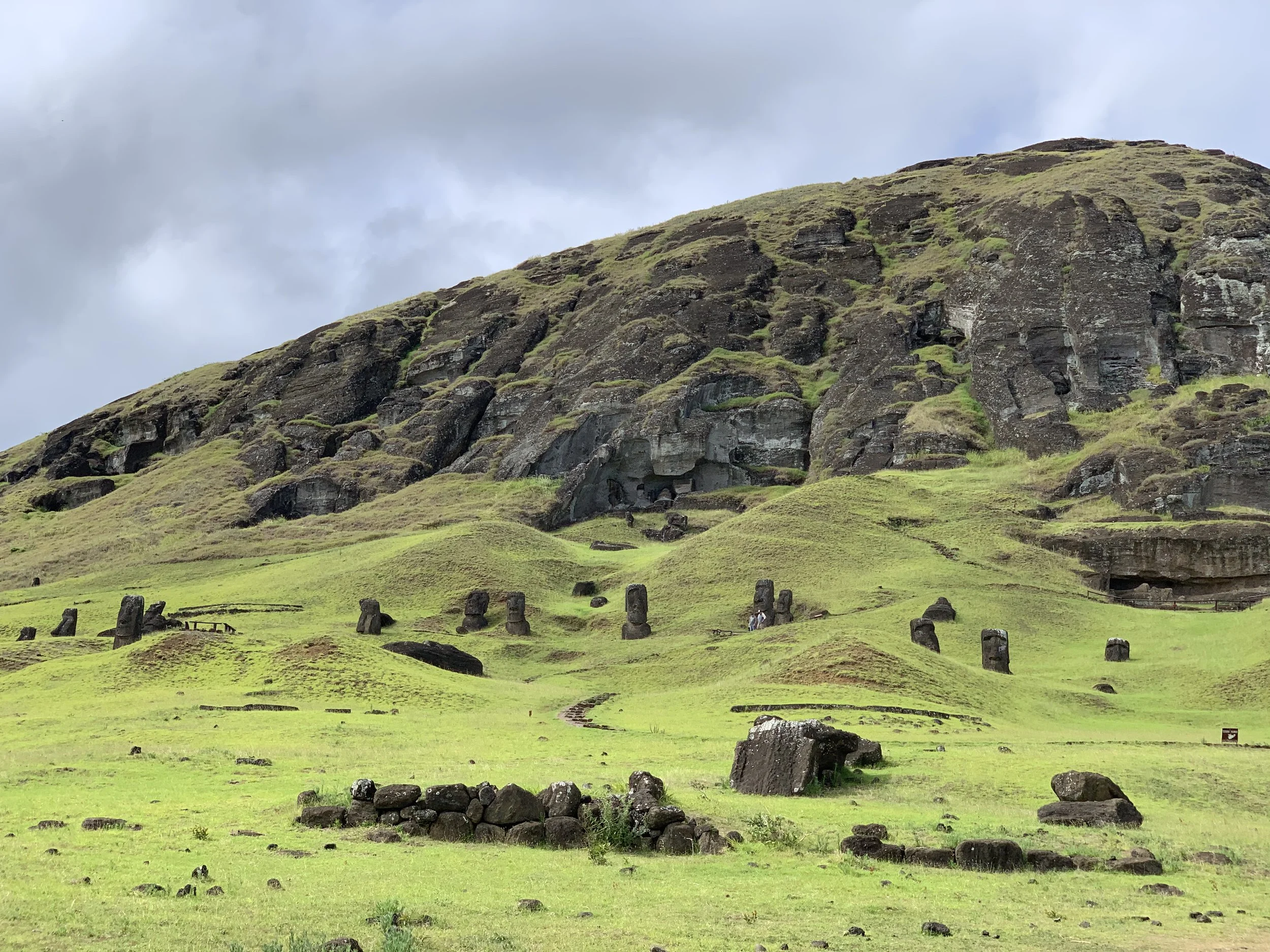
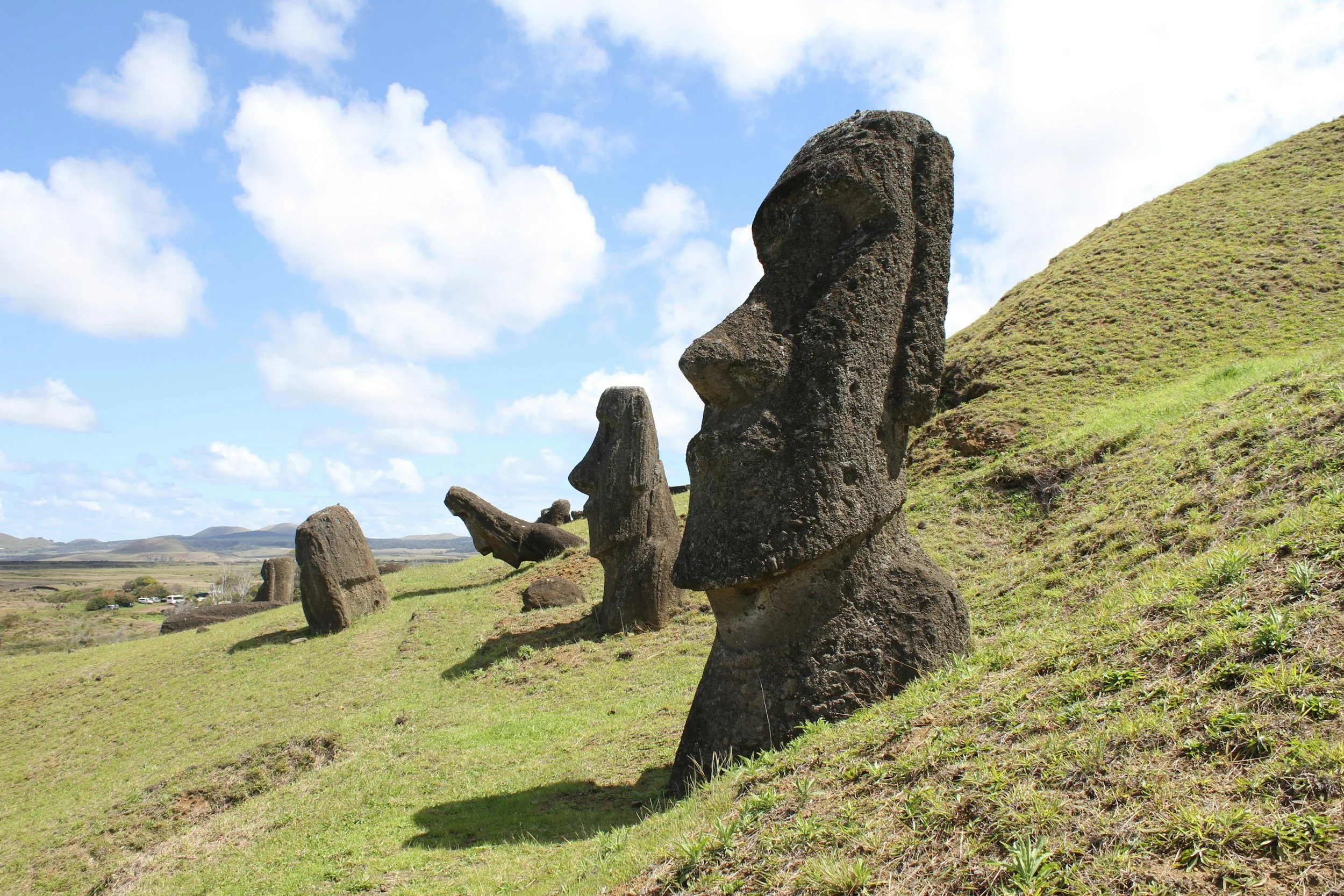
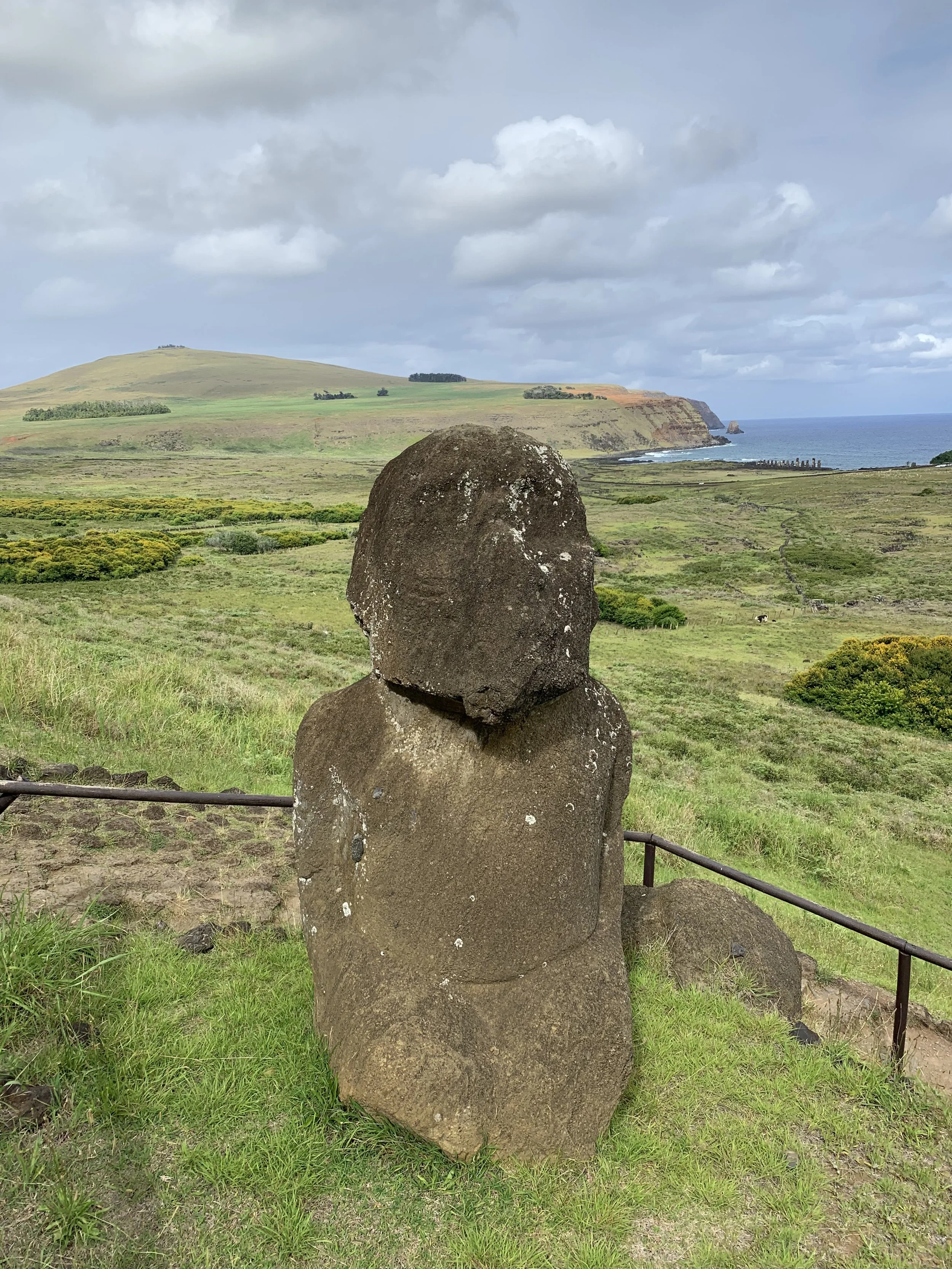
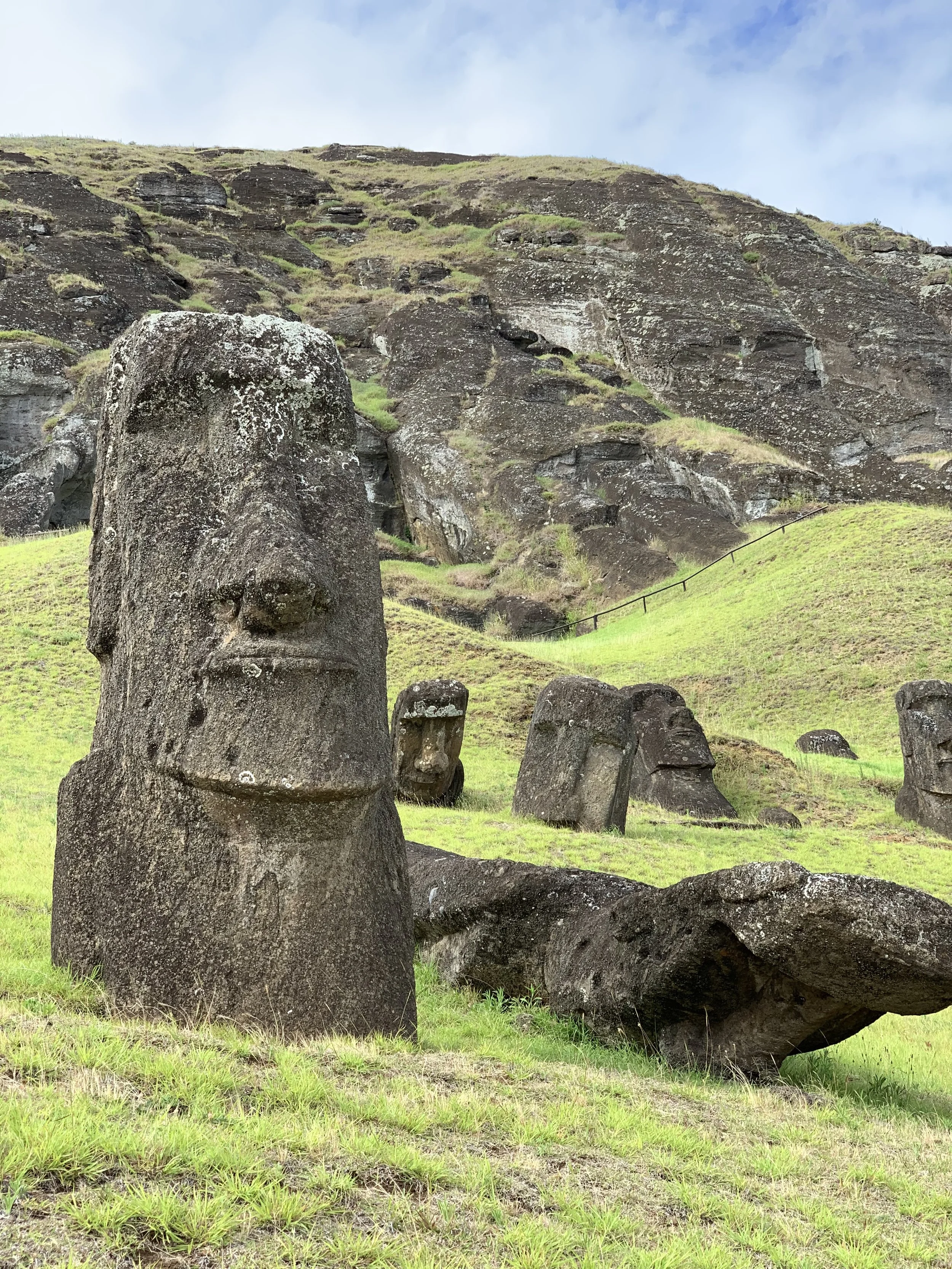
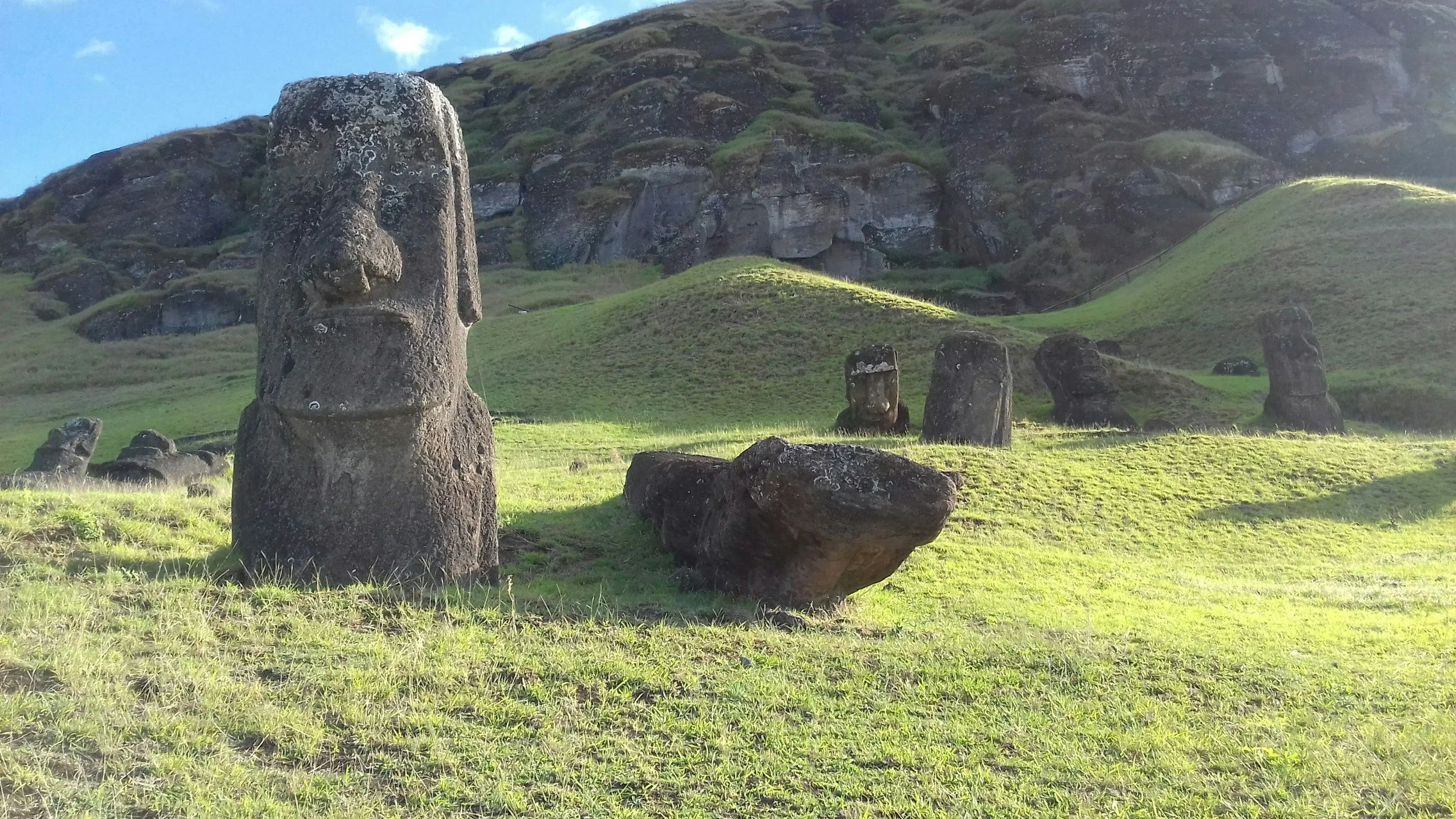
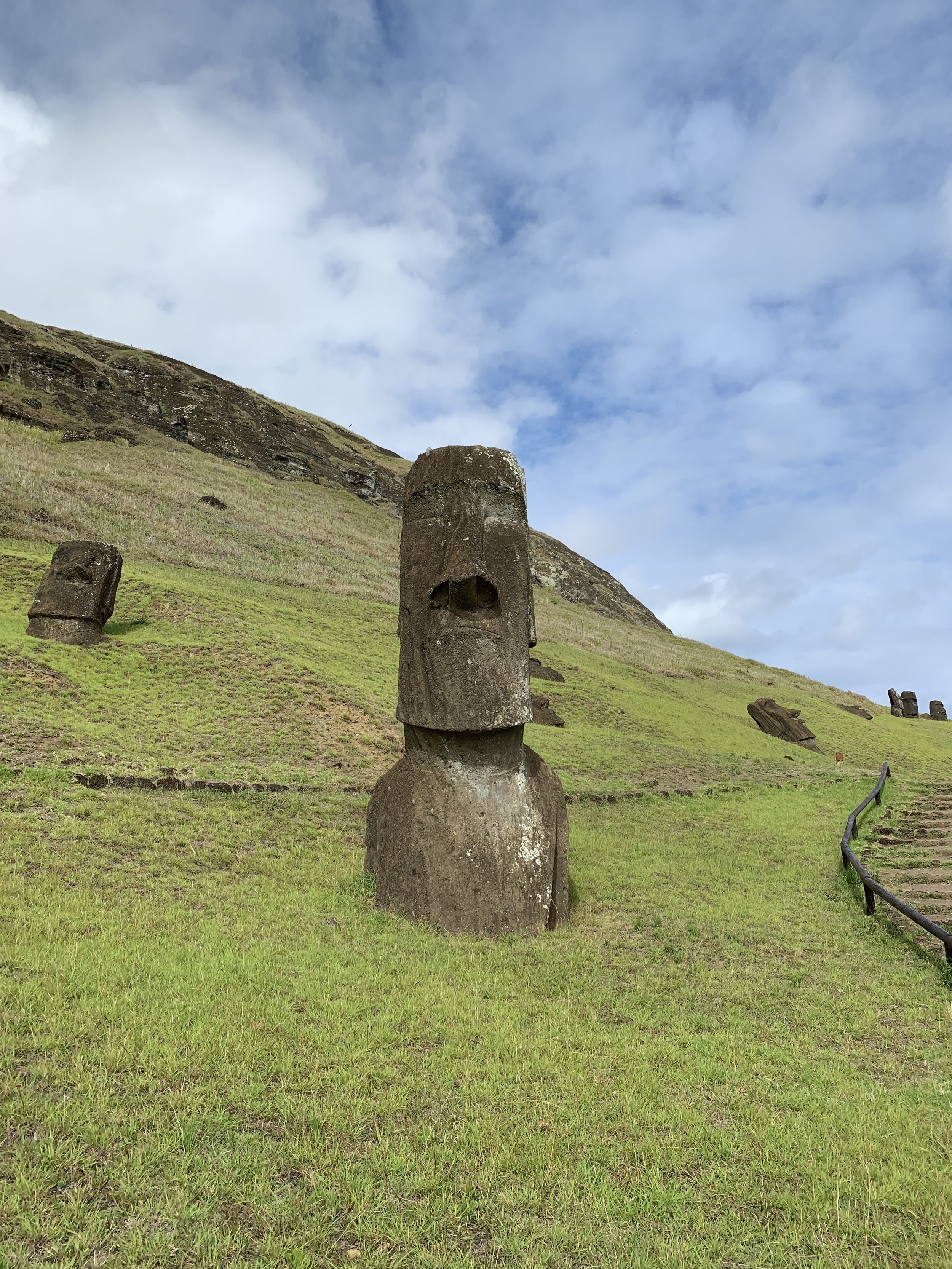
This site on the other side of the island from Hanga Roa called Rano Raraku is where all of the moai are believed to have been carved from. Legends say these moai walked to the different ahu platforms. A team of archeologists were able to prove that with ropes around the body and two teams of people on each side, they can lean the statue upright side to side to move them.
Many of the statues are still in the quarry and a few of them have only been moved a little farther out. There are hundreds of moai in this area and all of them are slightly different. There is even a moai that looks like a monk.
4 - Orongo Ceremonial Village
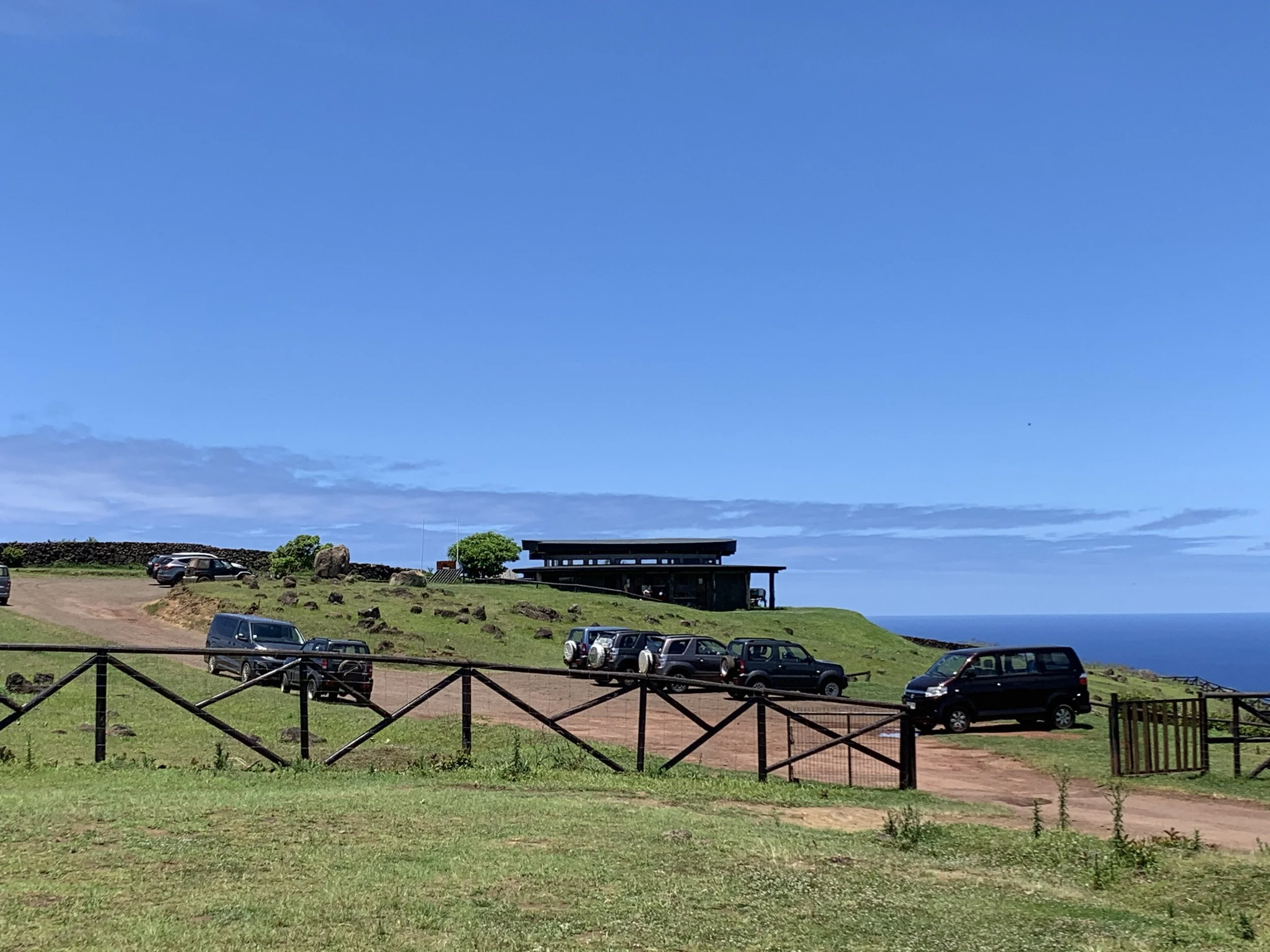
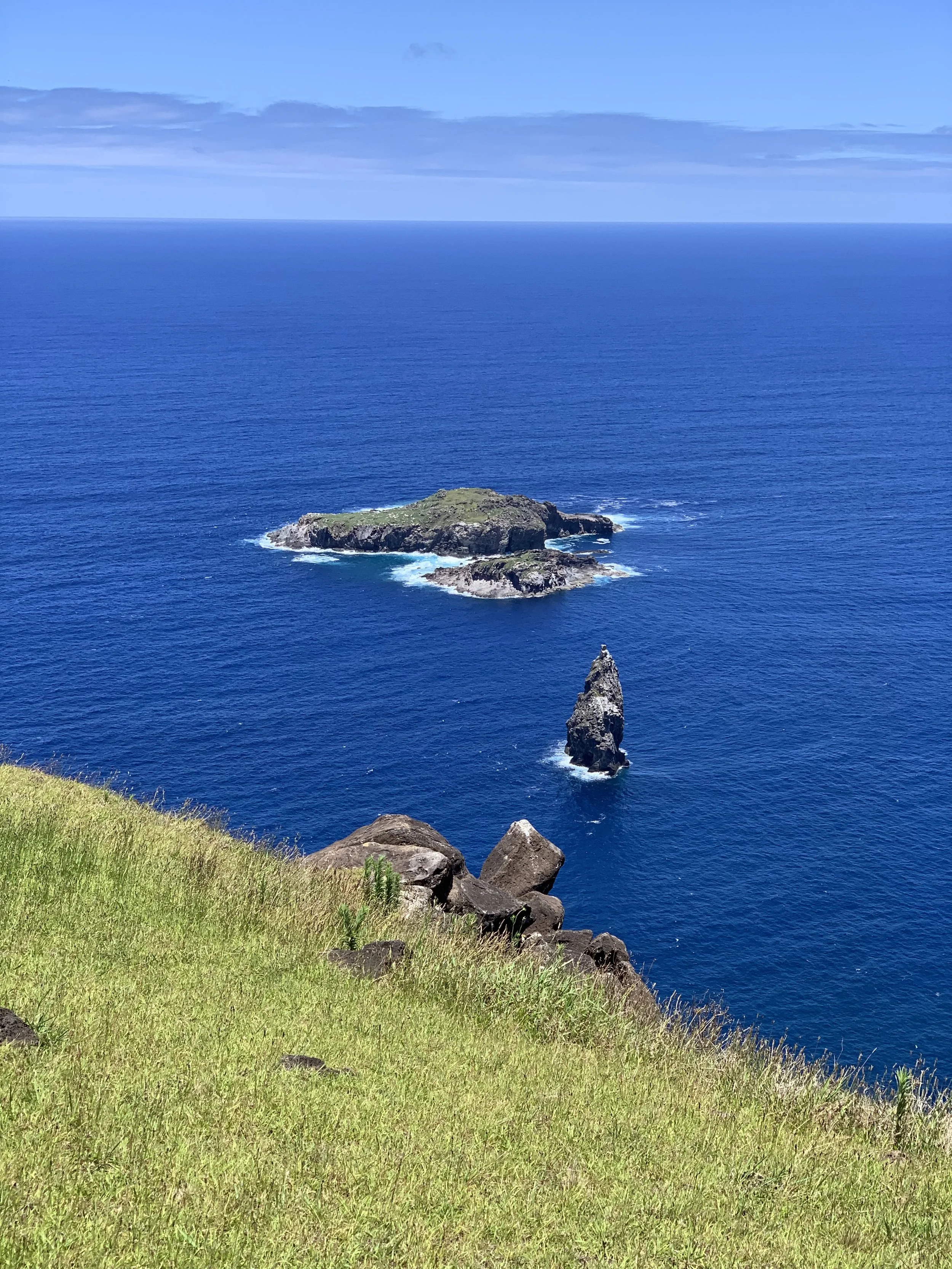
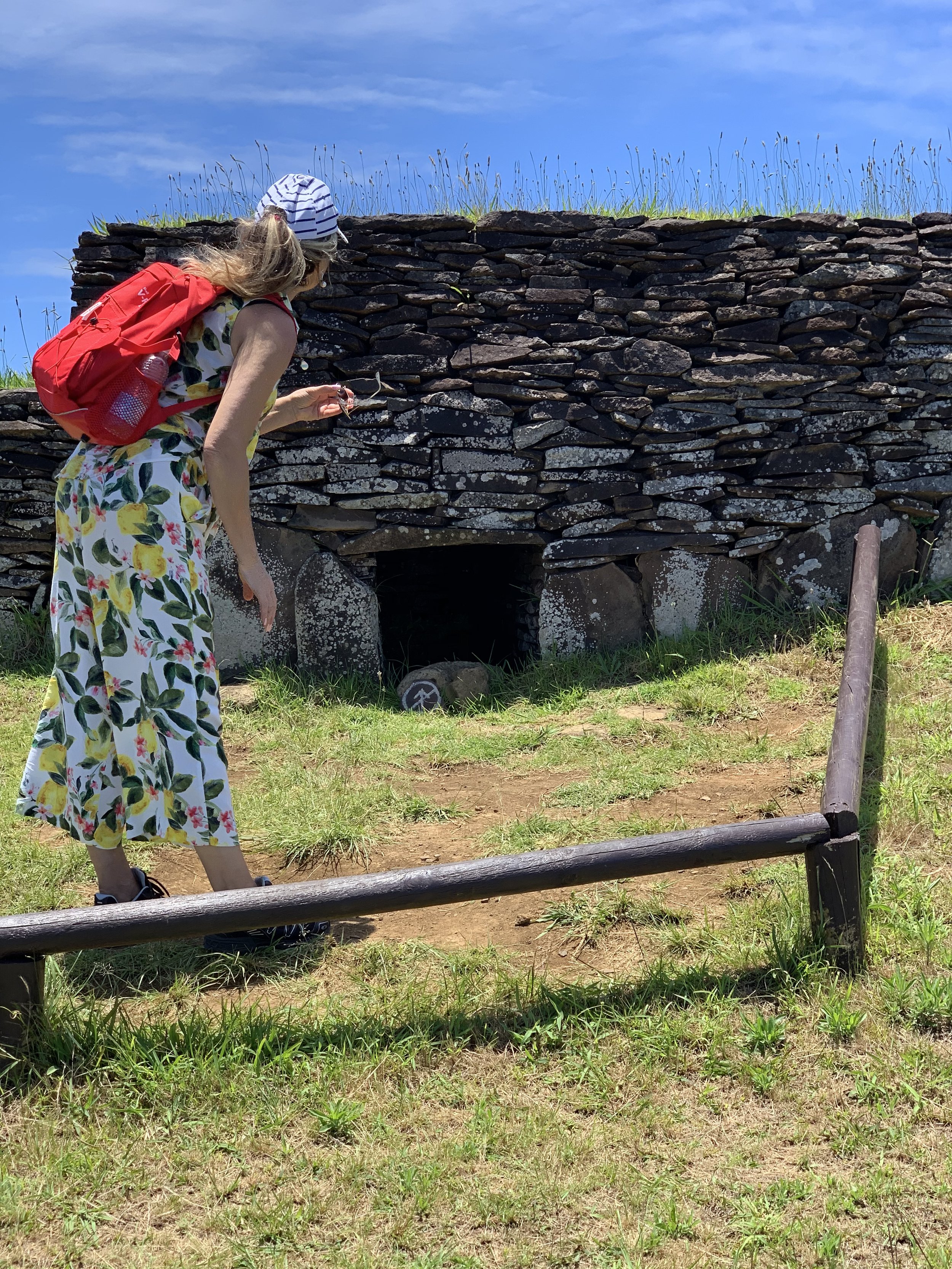
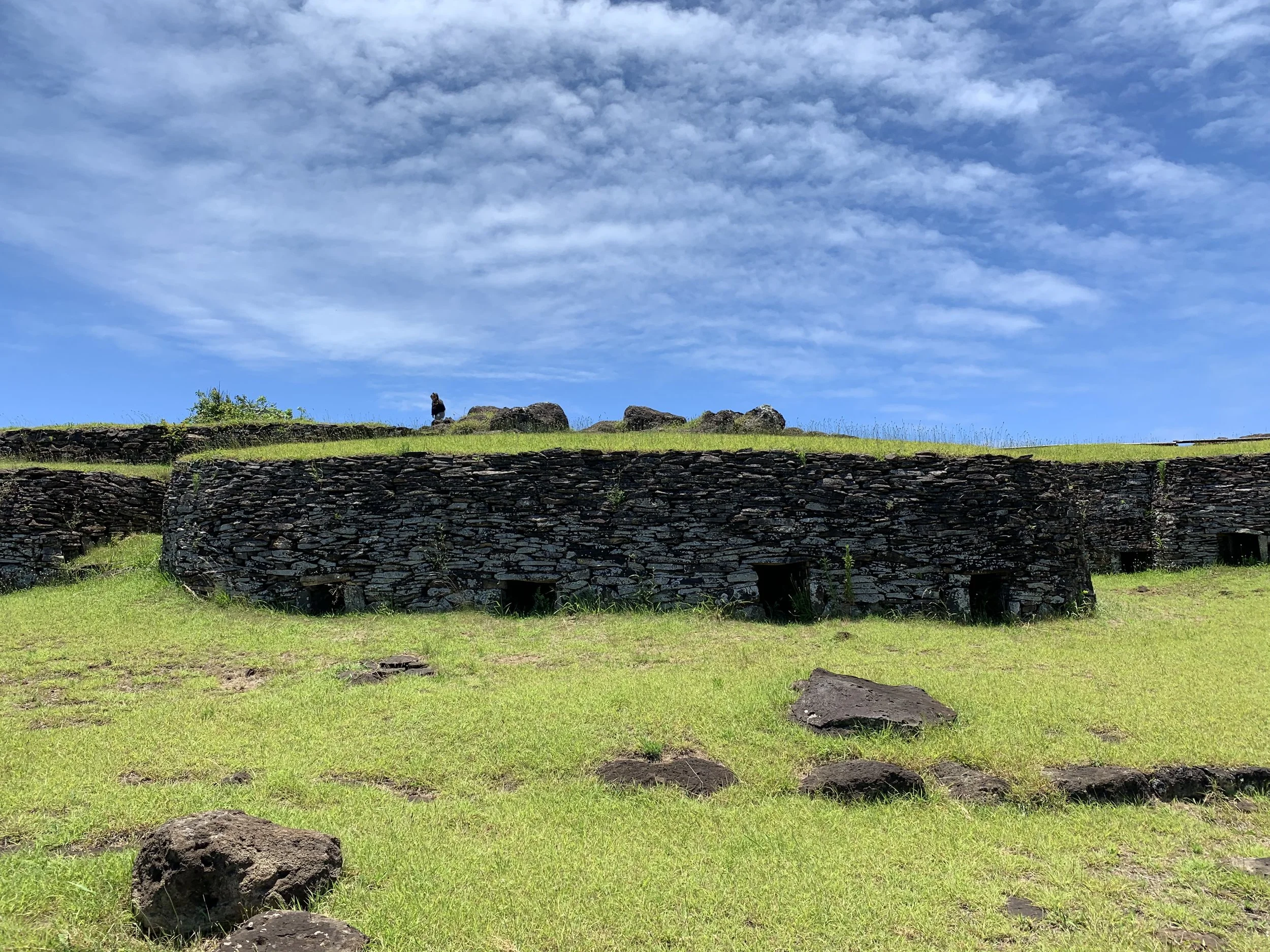
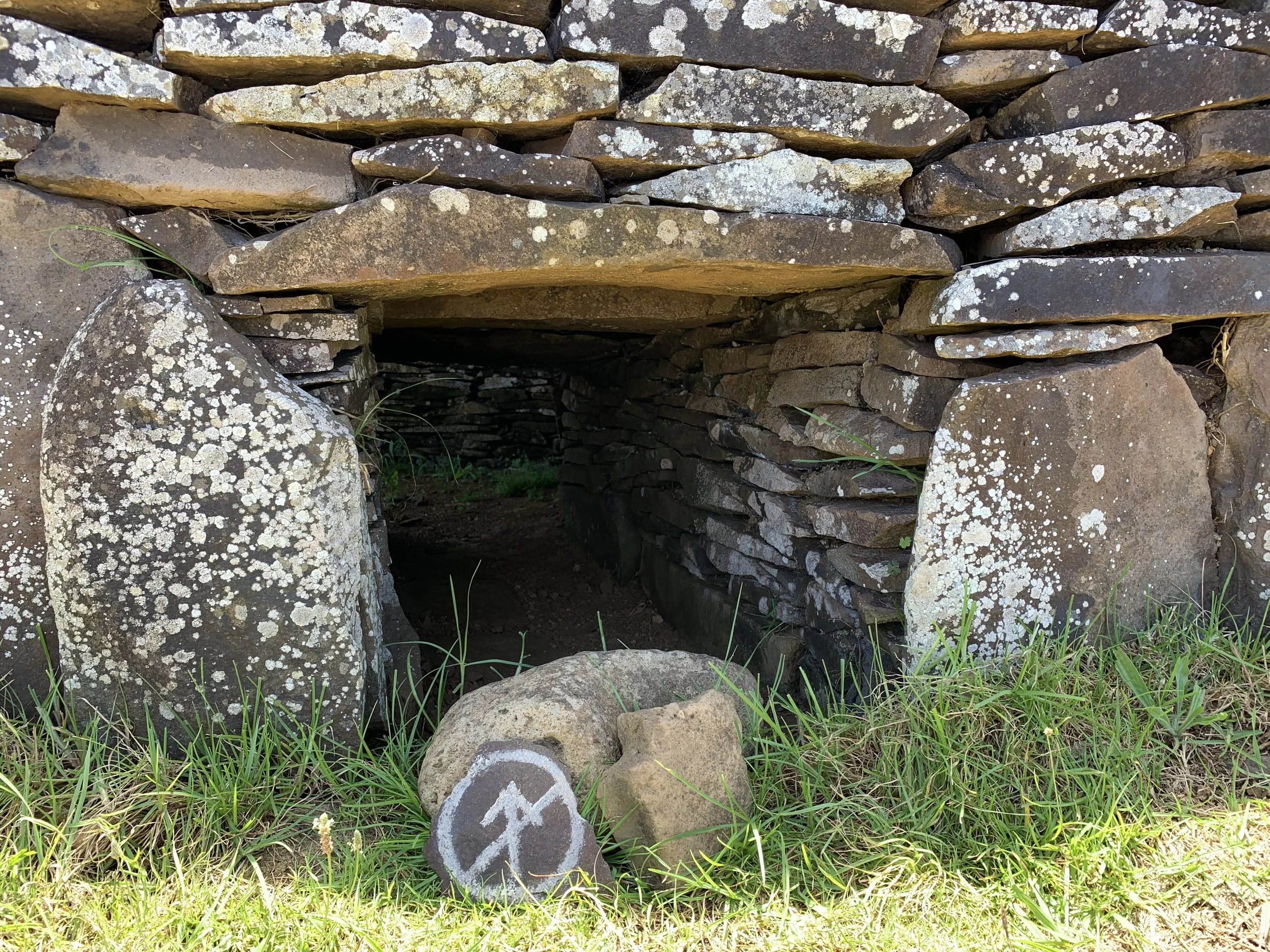
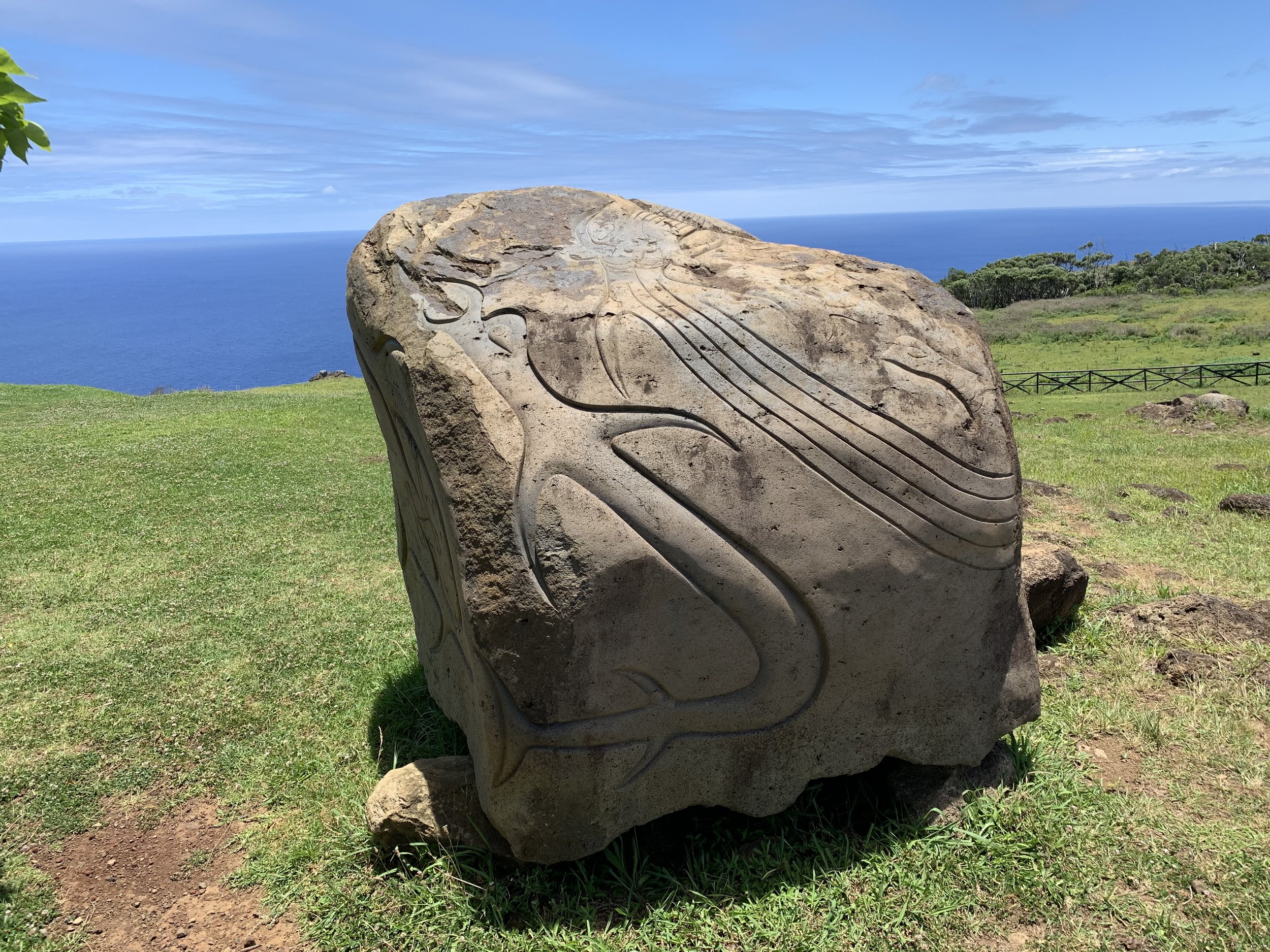
Between the 1700-1850s, the local people of Rapa Nui followed the Birdman cult of Tangata Manu. Each year, the winner of the competition must be the first one to successfully swim and bring back a sooty terns egg from the nearby island Motu Nui during the nesting season. This competition is very dangerous because of the dangerous cliffs and shark infested waters and there are many petroglyphs in the area to commemorate those who are successful.
The Orongo Ceremonial Village itself was restored in the early 2000s and a new visitor center was built with sponsorship from American Express in 2009. The small buildings in the village were not for living, but for temporary shelter for the brave competition participants who await the perfect time to cross the waters.
5 - Kari Kari Ballet Cultural Show
This cultural show centers around the origin stories of the Rapa Nui and many of their oral traditions. The dance styles are similar to Tahitian and Hawaiian because the dance group participates in Polynesian competitions and cultural exchanges attended by both Hawaiians and Tahitians.
The show starts shortly after sunset around 7 PM and lasts about 30-45 minutes. You can buy tickets at the door or through many of the tour providers in town.
6 - Relax at the Anakena Beach
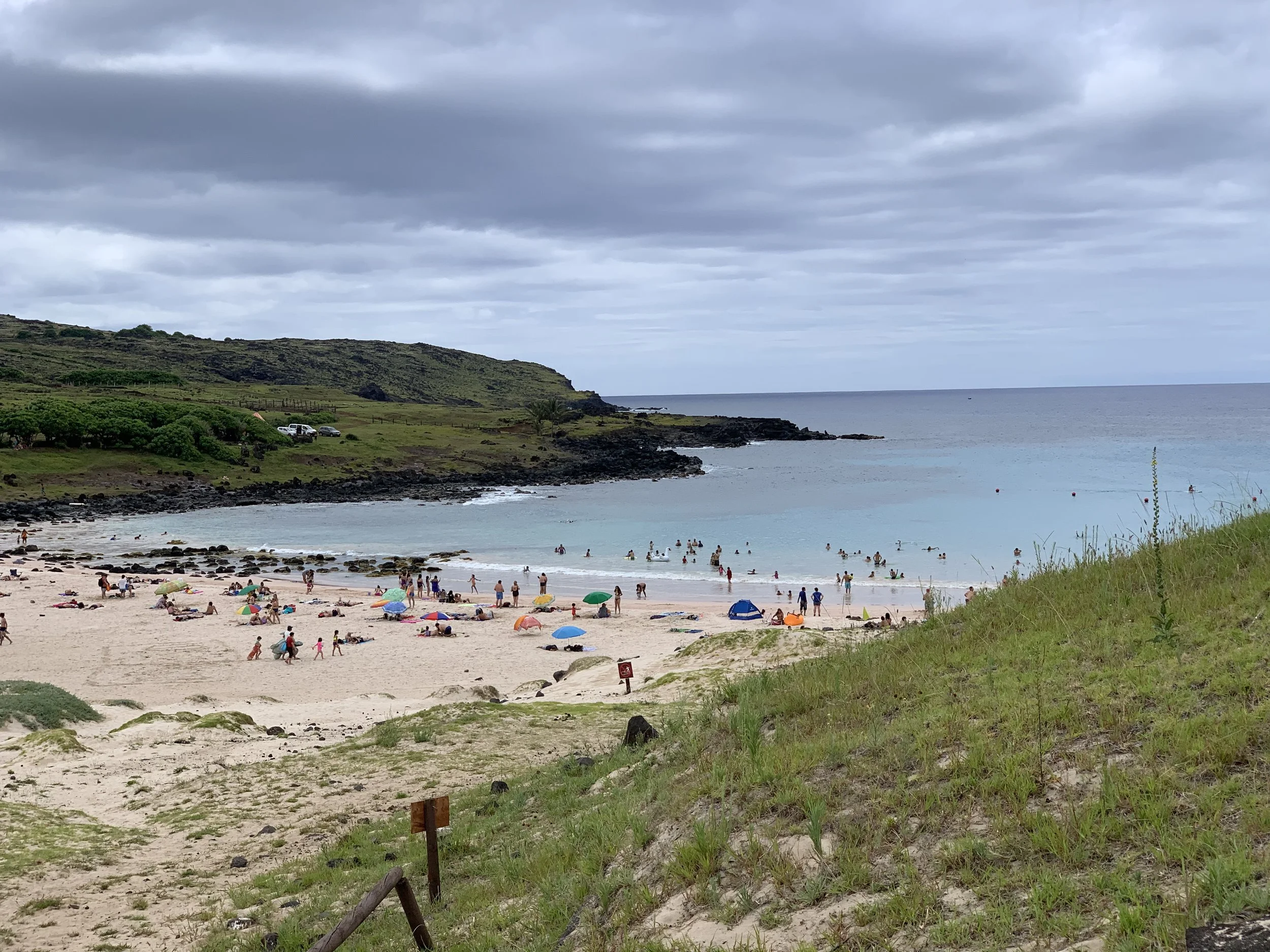
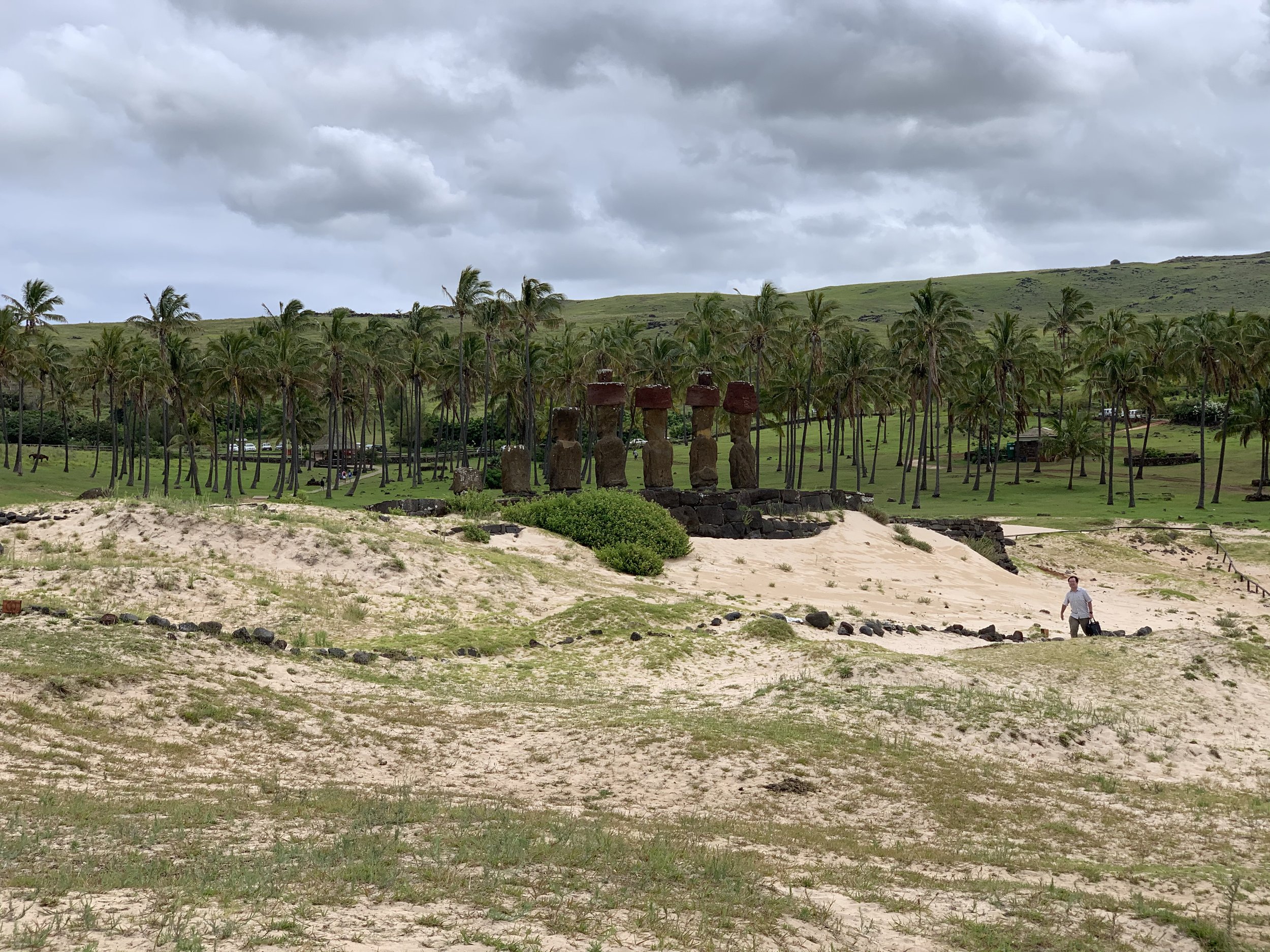
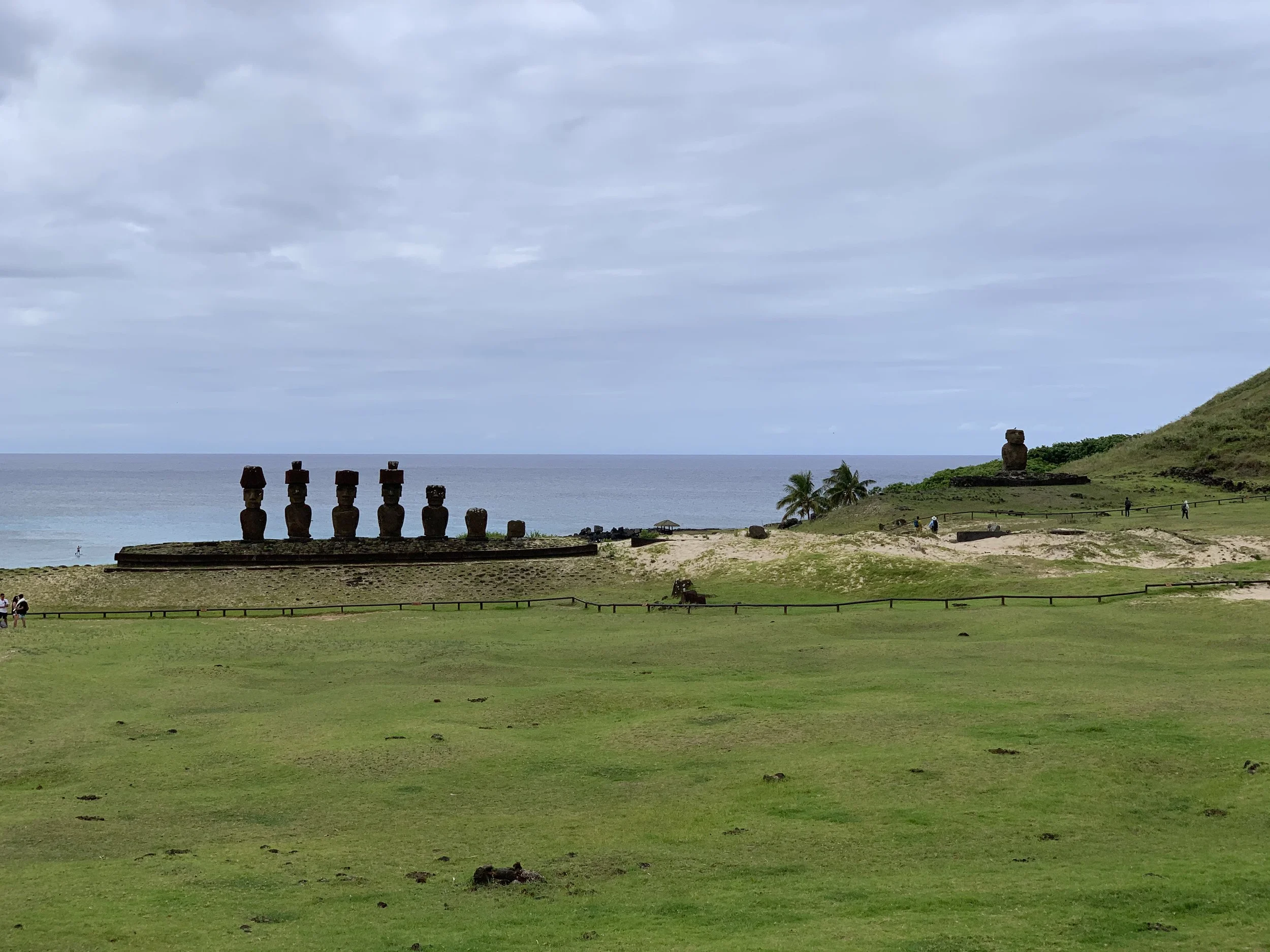
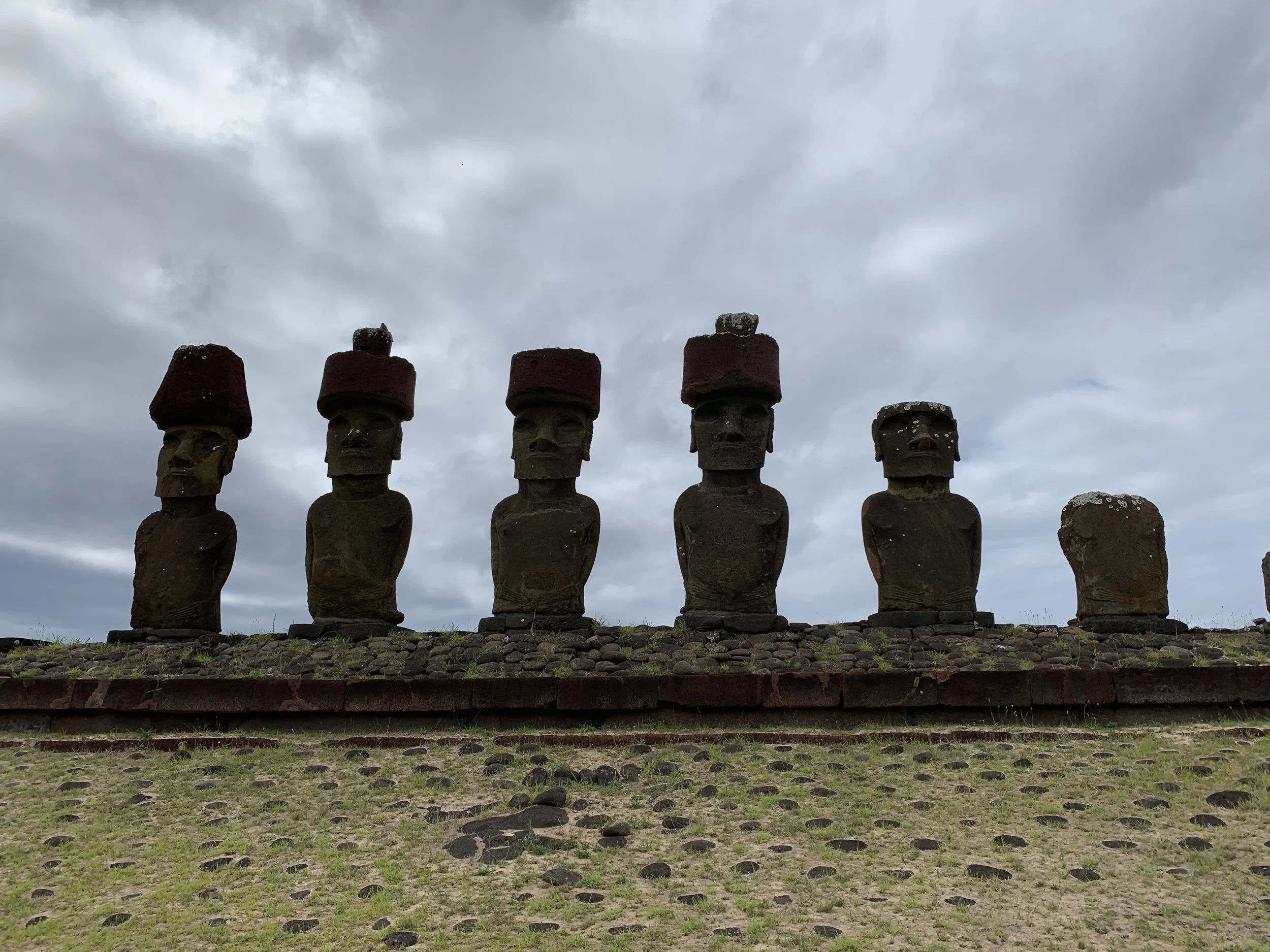
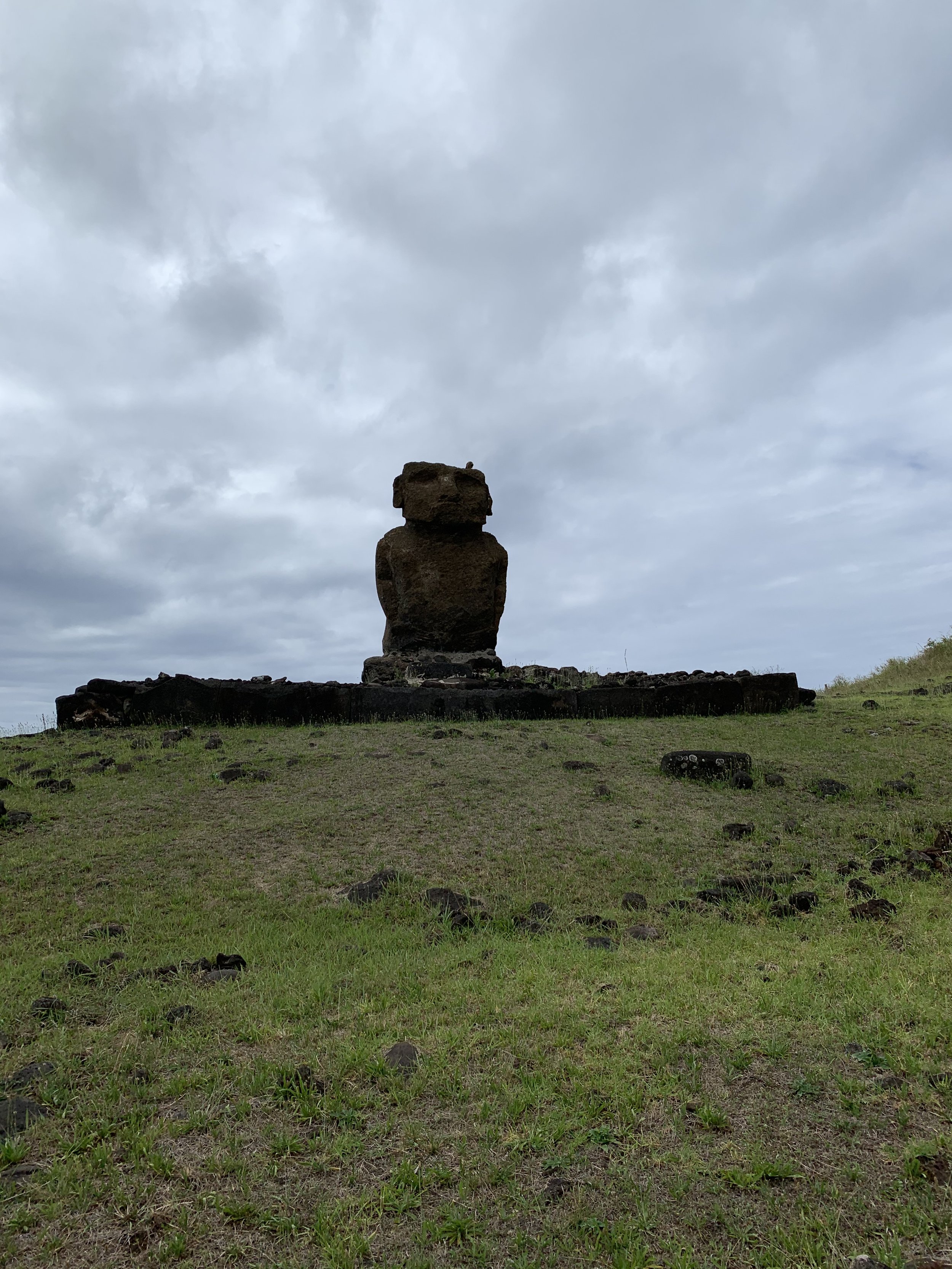
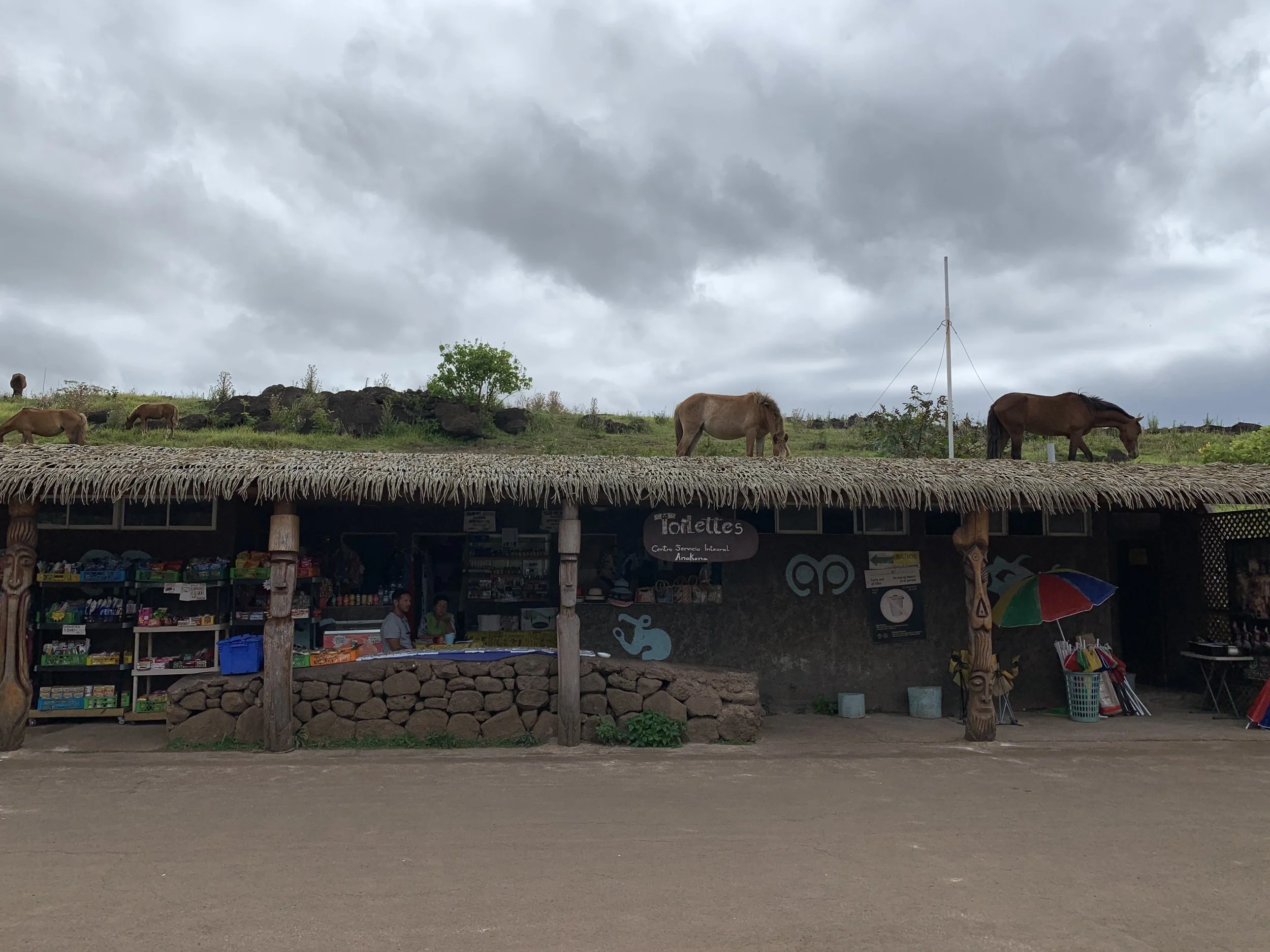
The best beach on the island is the Anakena Beach, the first place the King arrived to settle on the island according to folklore. The beach here has a few small restaurants and food vendors, and restroom facilities. Many locals come here to relax during the day. You can sometimes see fish in the calm waters as you take a dip in the ocean.
Near the beach is Ahu Nau Nau, Ahu Ature Huki, and the discovery site of the white coral eyes that moai have. Because these are one of the most recently created moai on the island and the sands protected the stone from the elements, you can still see traces of the intricate carving on the face, body, and fingers.
7 - Sunset at Ahu Tahai, Ahu Vai Uri, and Ahu Ko Te Riku
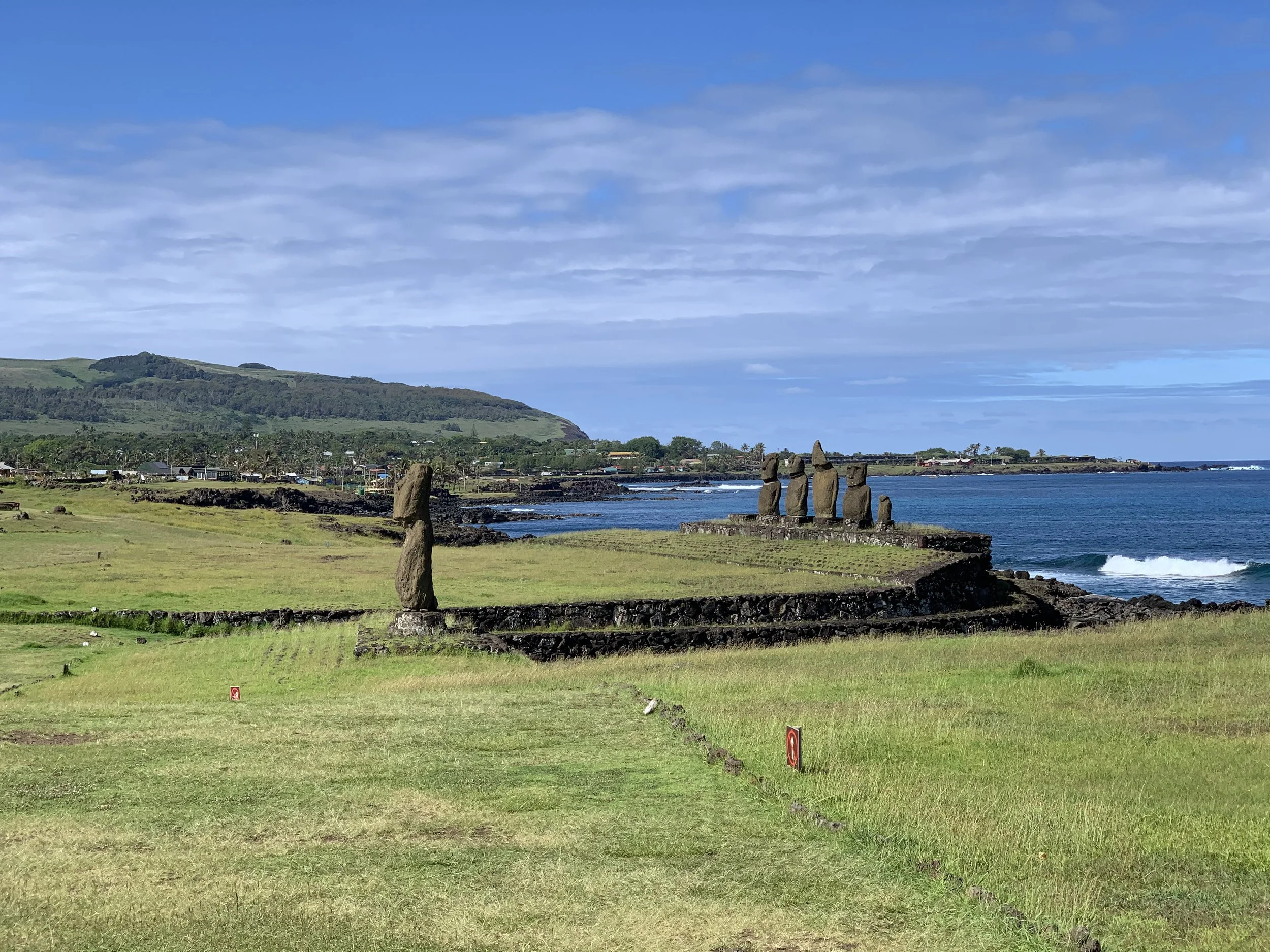
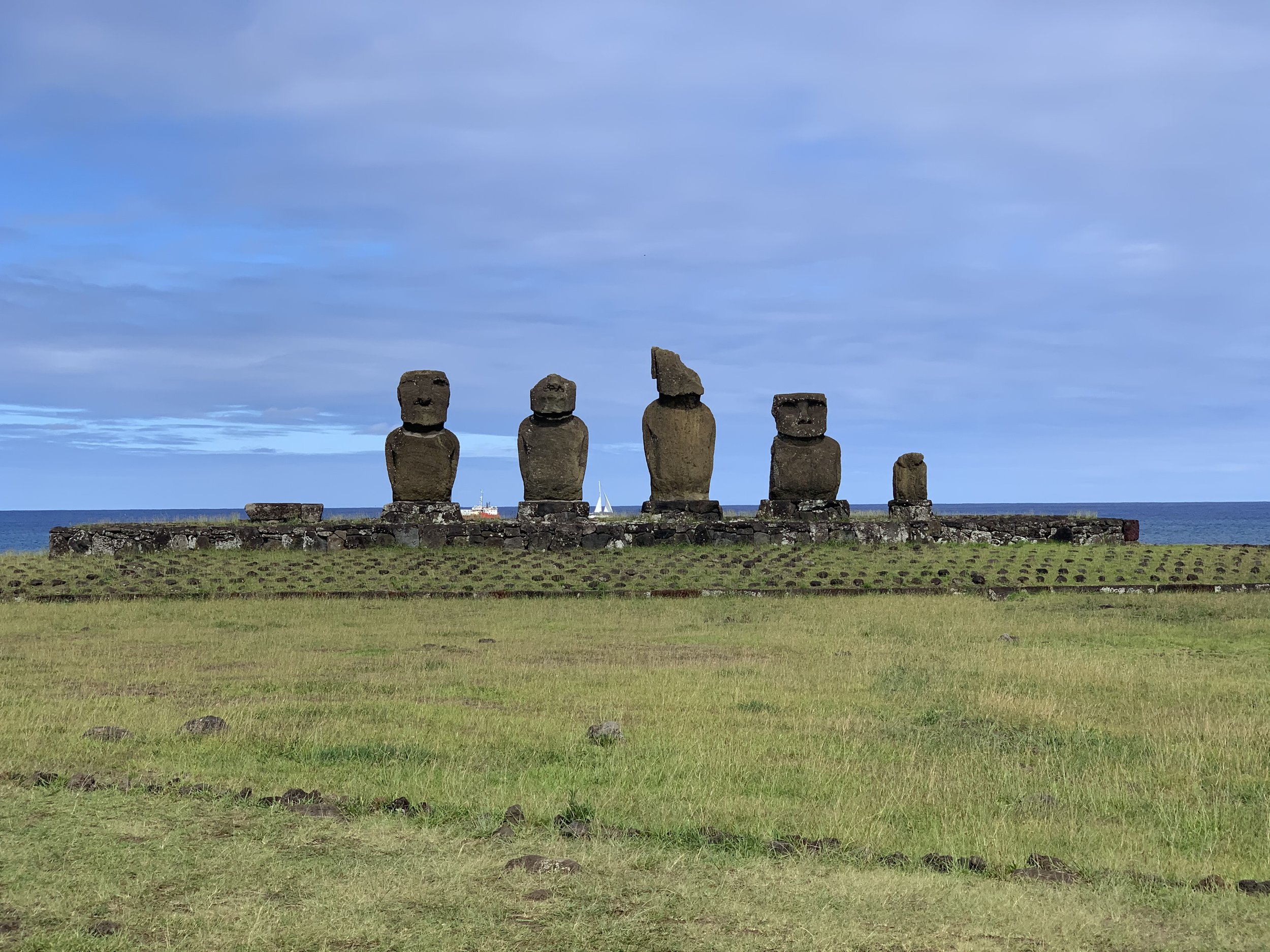
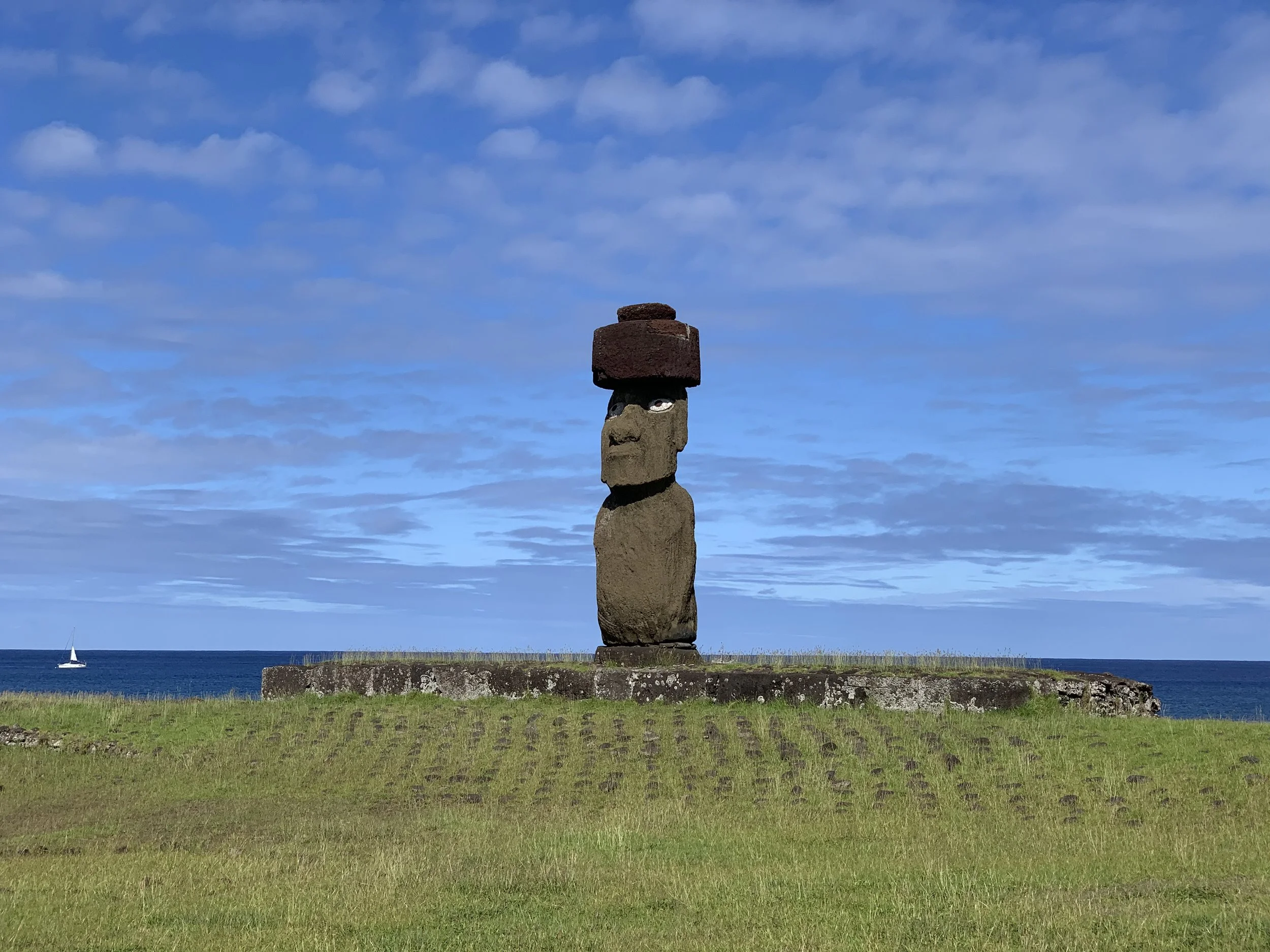
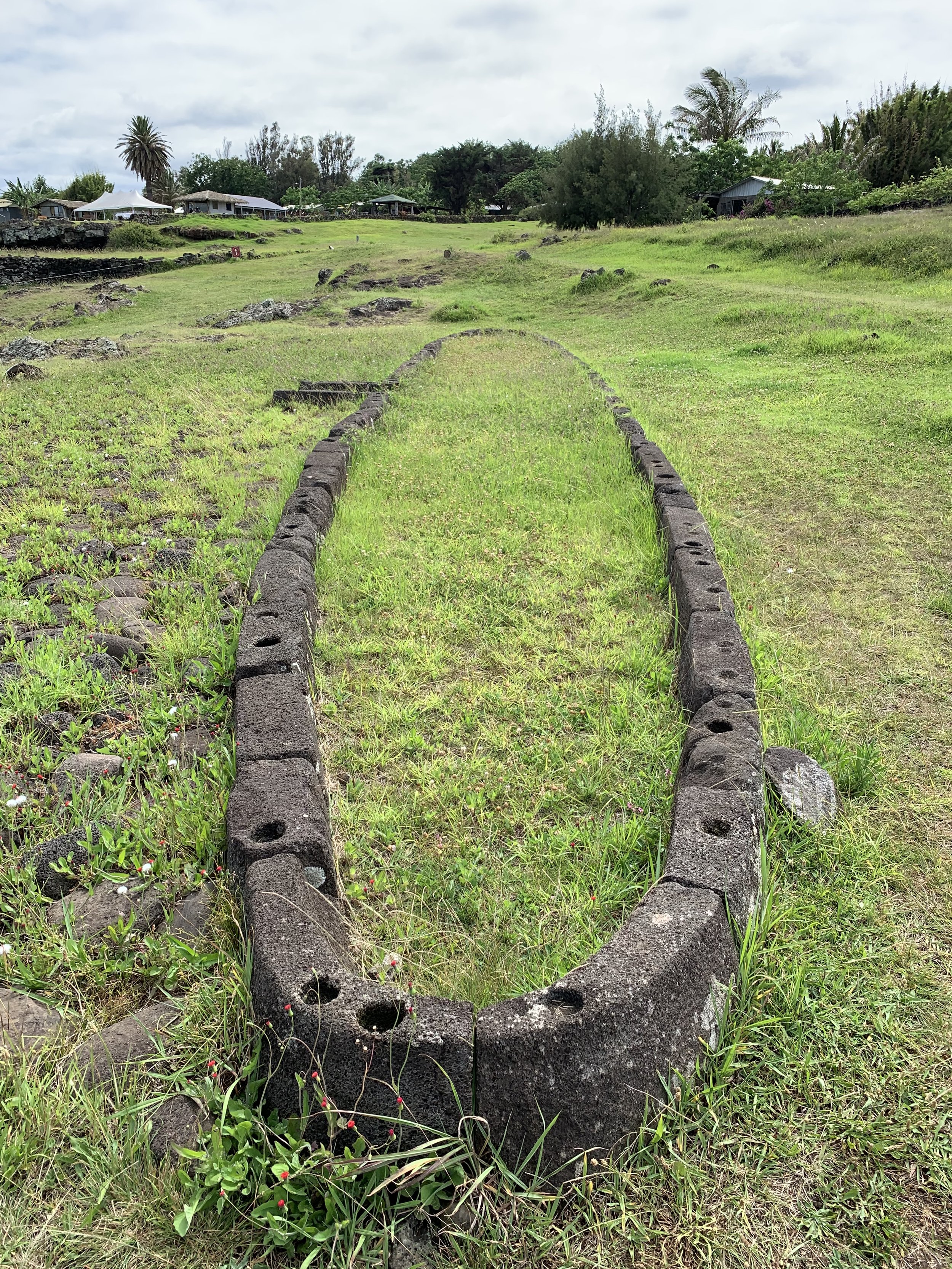
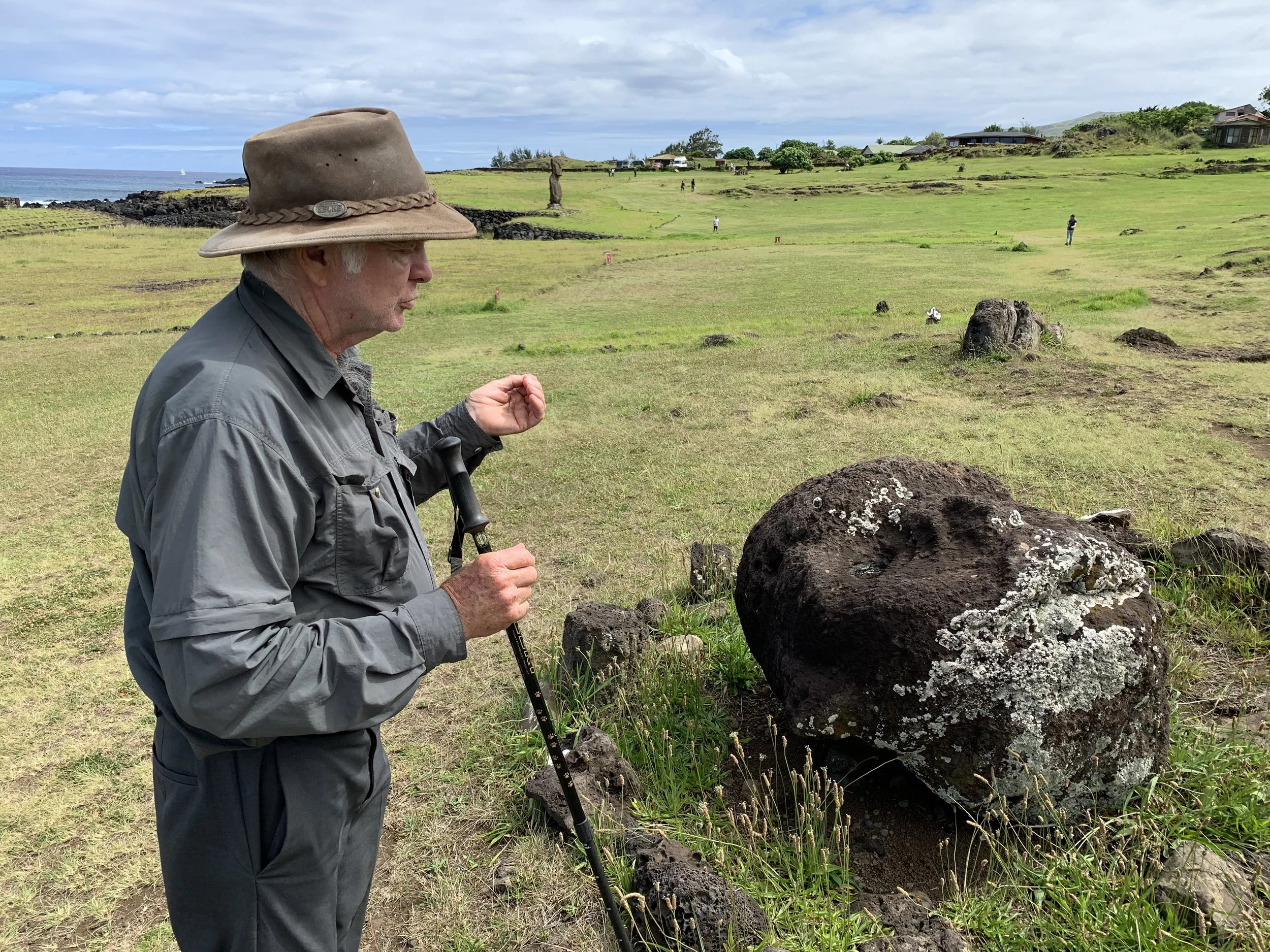
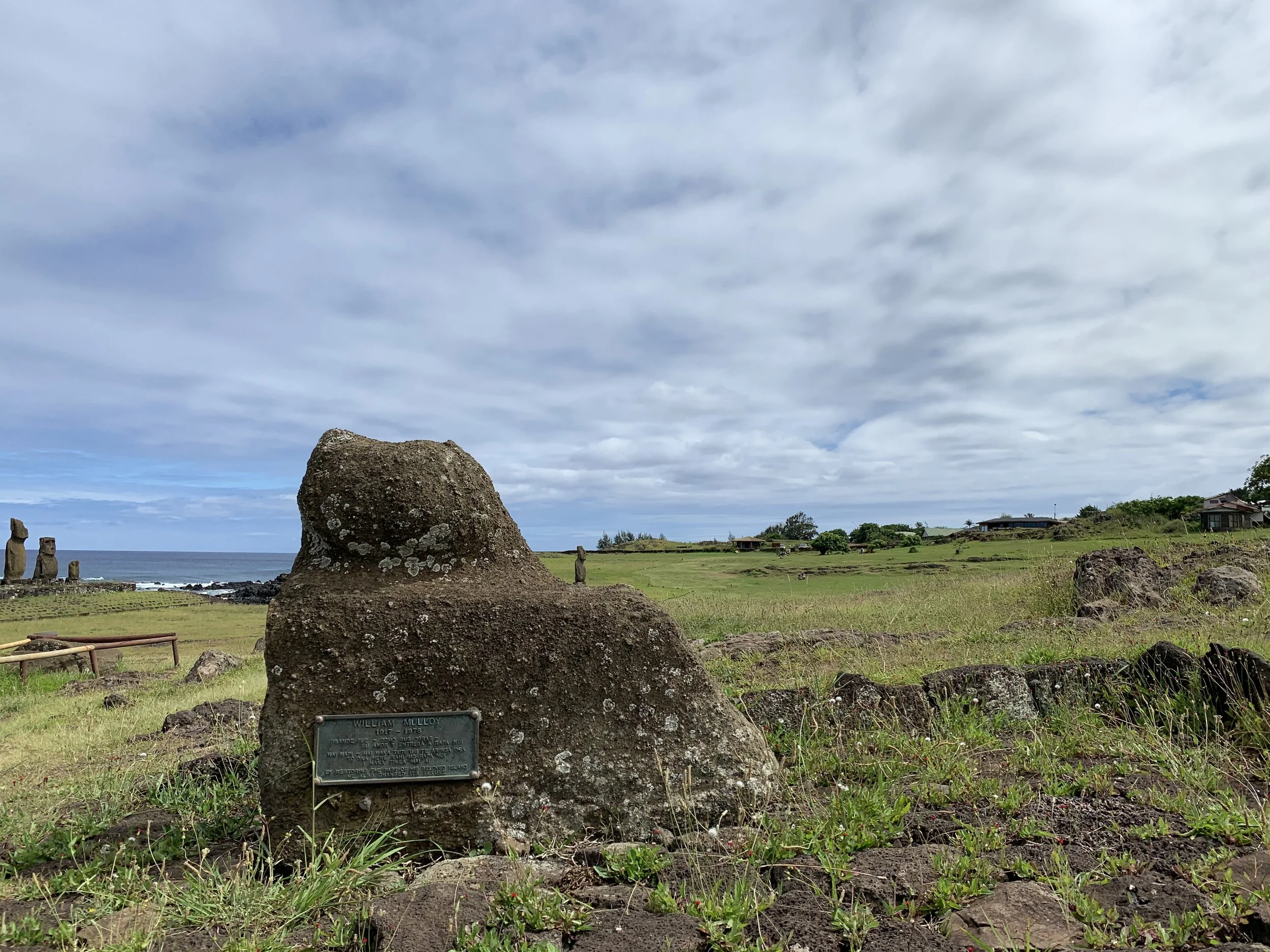
The best and closest moais in town are the 3 Ahu of Tahai. They are within Hanga Roa overlooking the Pacific Ocean and have been an important site for many of the ceremonies that happen in town in recent times. You will most likely pass this place driving through town and almost all tours start with this ahu.
The single moai without the hat is one of the earliest ones dating to around 850 A.D. and because of erosion, there aren’t many details left on the statue itself. The nearby set of 5 moai are Ahu Vai Uri and thought to be built around 1200’s. The last moai with the eyes and the hat is the Ko Te Riku. Eyes made from coral was discovered in one of the archeological sites and this is the only moai with added eyes too how visitors how it would have looked back in the day.
The nearby village and long boathouses were thought to have housed between 50-150 people. There are rocks for collecting rainwater, and structures for chicken coops. The grave of William Mulloy, one of the leading archeologists who dedicated his life to Easter Island, rests nearby with his wife.
This is also the best place to watch the sunset so many group tours come here before the Kari Kari show.
Honorable Mentions
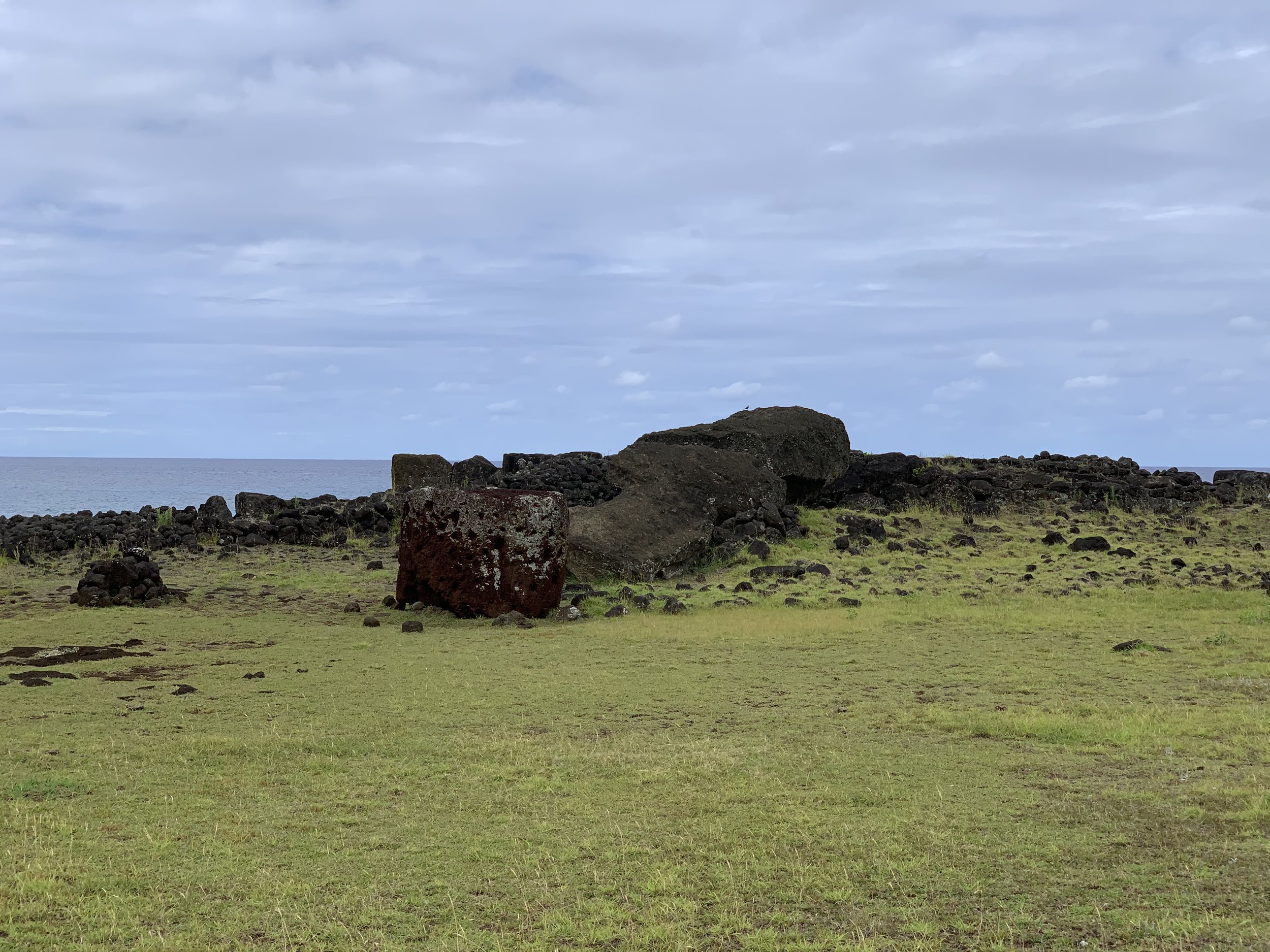
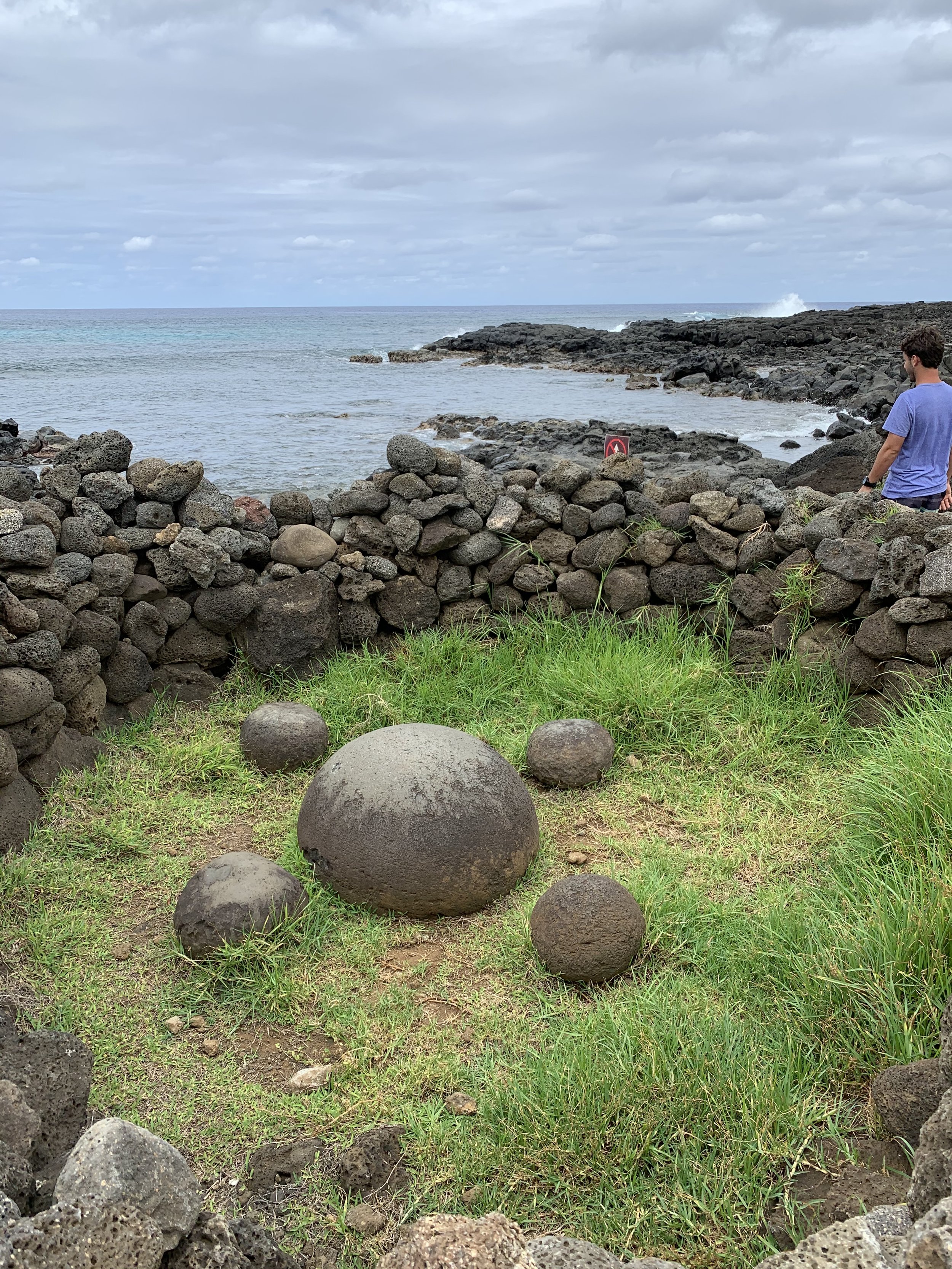
The Moai Paro is the largest moai to be moved outside of the query and the nearby Te Pito Kura magnetic stone is thought to have magical energy powers. The moai is unfortunately broken into two pieces when it was toppled. This site is near Ahu Tongariki and can be a stop before or after depending on your direction of travel.
Puna Pau Quarry is where the red hats of the moai are from. The red stone here is noticeably different than the black rock used for the body and many hats are still left in the area. The site is a short detour outside of Hanga Roa and the road leading to Anakena Beach and Ahu Tongariki.
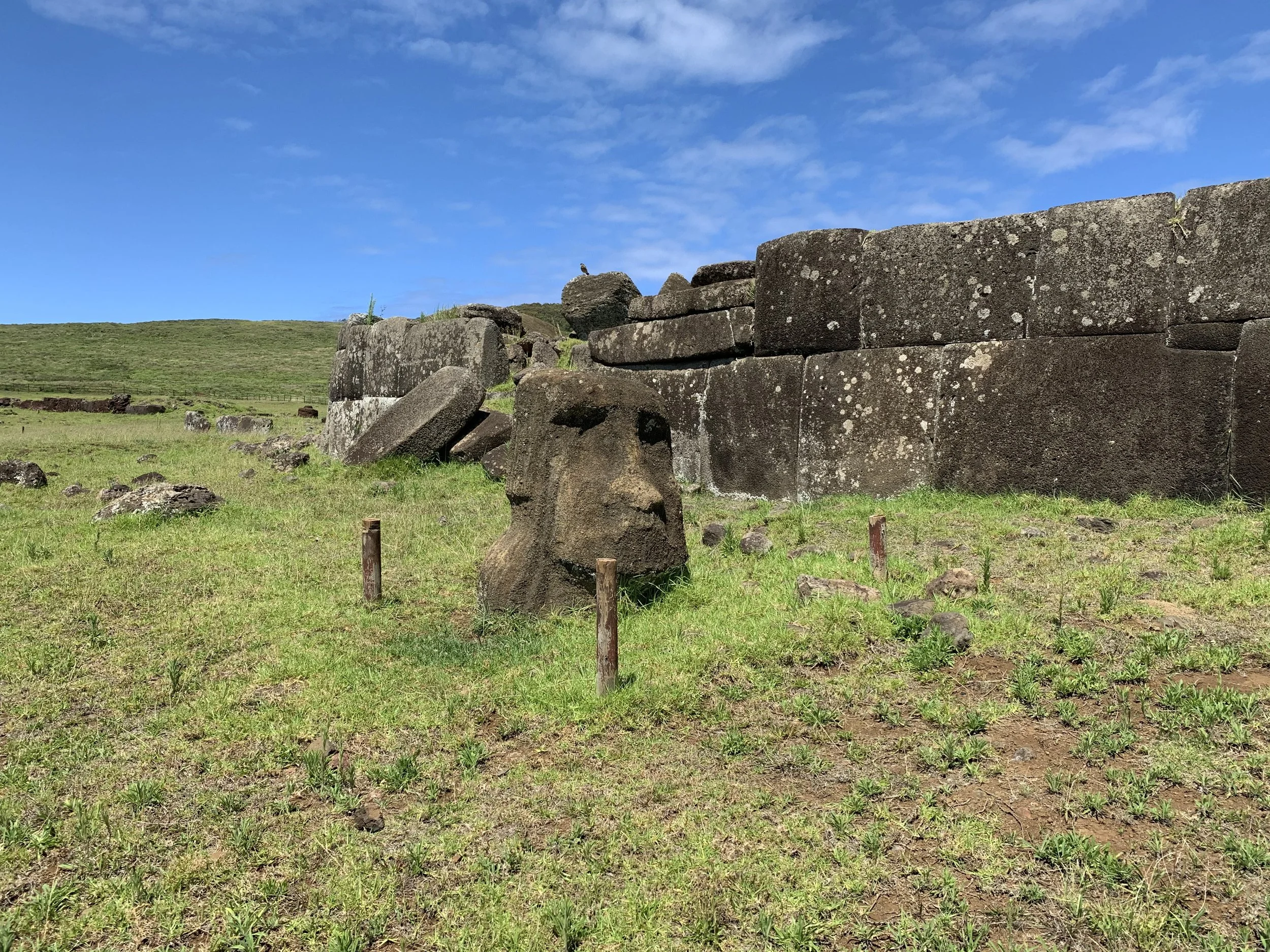
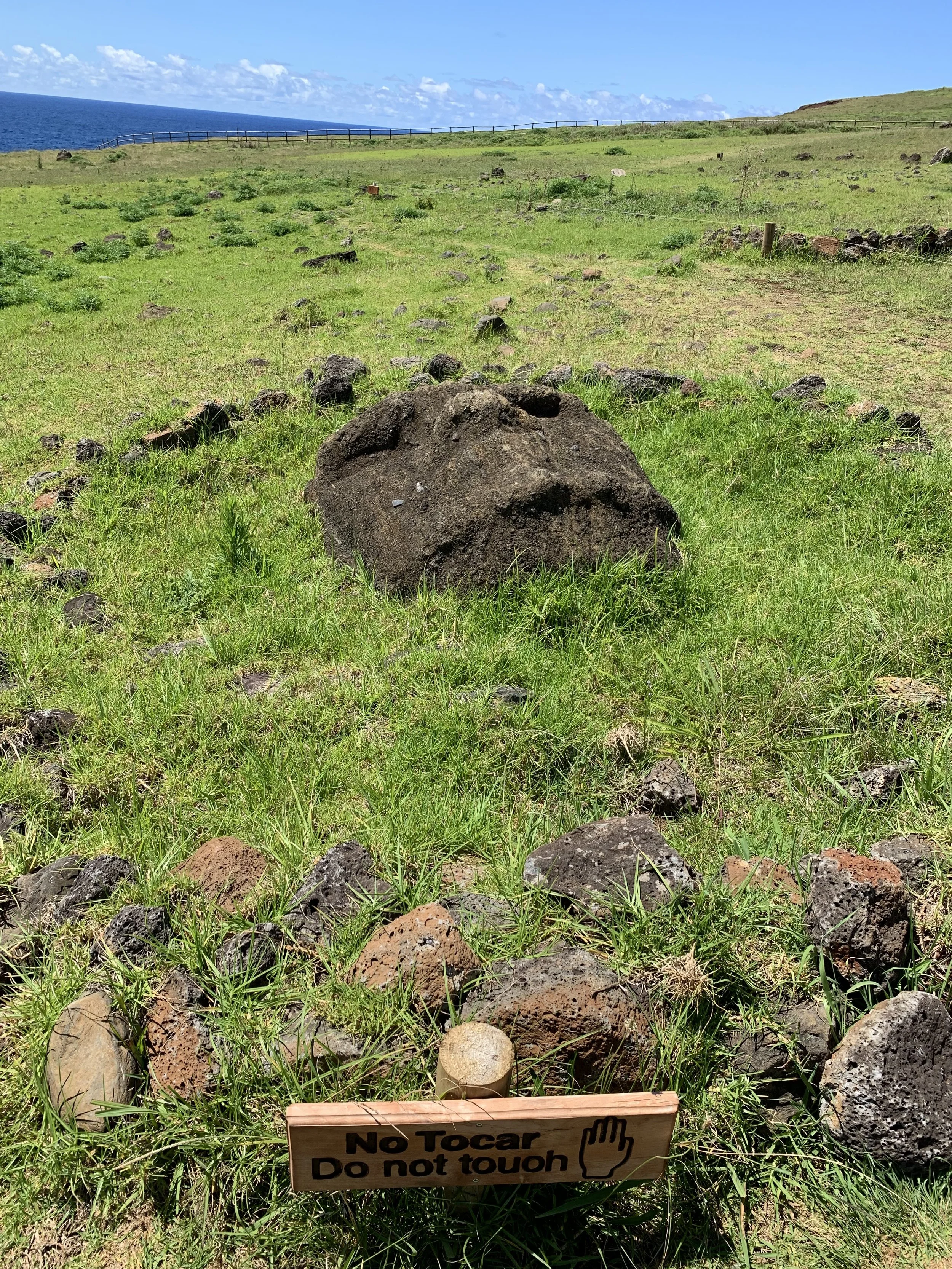
Vinapu, the Inca looking rock pattern ahu, is one of the more mysterious. Some say this is evidence of cultural exchanges with the Inka with similar rock carving methods as the Macchu Picchu. You will likely visit this before the crater and Orango Village.
There are also many caves on the island used for hiding during the unfortunate slavery period from the Peruvians and often still used by local families today for picnics or stops during fishing trips. While the caves are interesting, they are quite a trek with not much to see inside. The oral stories are much more interesting than the actual caves and your guide might have a private family cave too.